The Modernist Movement
An exhaustive look at the modernist movement — the facts, the myths, the rabbit holes, and the things nobody talks about.
At a Glance
- Subject: The Modernist Movement
- Category: Art & Literature
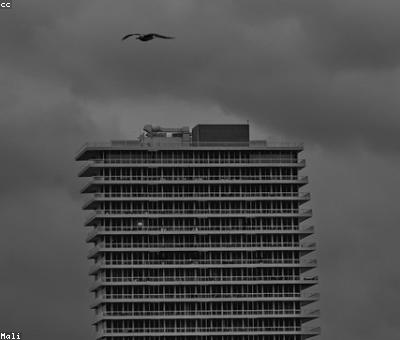


Rewriting the Rules of Art
The Modernist movement was a seismic shift that upended centuries of artistic tradition and forever changed the course of Western culture. Emerging from the rubble of World War I, modernist artists and intellectuals sought to cast off the shackles of the past and forge a bold, innovative future. Rejecting the naturalism and realism that had dominated the 19th century, they experimented with radical new forms of expression that prioritized abstraction, fragmentation, and the subversion of established norms.
At the vanguard of this revolution were pioneering figures like Pablo Picasso, Virginia Woolf, T.S. Eliot, and Igor Stravinsky, whose groundbreaking works challenged the very foundations of art, literature, and music. Picasso's Les Demoiselles d'Avignon (1907) shattered the traditional conventions of figurative painting, while Woolf's experimental novel Mrs Dalloway (1925) upended the narrative structure of the novel form.

The Shock of the New
The modernist revolution did not come without its share of controversy and backlash. Audiences accustomed to the comforting familiarity of 19th-century art and literature were often bewildered and outraged by the jarring avant-garde works of the modernists. When Stravinsky's ballet The Rite of Spring premiered in 1913, the dissonant, pulsating score and primitive, angular choreography incited a near-riot in the Parisian concert hall.
"Art is not a mirror to reflect the world, but a hammer with which to shape it." - Bertolt Brecht, German playwright and theater director
Yet the modernists persisted, driven by a fervent belief in the power of art to transform society and the human condition. They saw their radical experiments not as exercises in empty formalism, but as vehicles for challenging the complacency of the bourgeoisie and exposing the underlying truths of the modern experience. As the 20th century progressed, the once-shocking innovations of modernism would gradually be absorbed into the cultural mainstream, paving the way for even more daring and subversive artistic movements to come.
The Modernist Diaspora
The modernist movement was never a monolithic or unified entity, but rather a sprawling constellation of diverse, often conflicting schools and tendencies. From the Cubists and Futurists to the Expressionists and Surrealists, each group had its own distinct aesthetic and ideological orientation. And as the political and social landscapes of Europe shifted in the interwar period, many modernist artists and intellectuals found themselves scattered across the globe, taking their revolutionary ideas with them.

The Legacies of Modernism
The echoes of the modernist revolution can still be felt in the art, literature, and design of the present day. From the abstract canvases of the Abstract Expressionists to the experimental novels of the postmodernists, the radical innovations of the modernists have become the building blocks of contemporary culture. And as the world grapples with the social, political, and technological upheavals of the 21st century, the modernist spirit of reinvention and disruption continues to inspire new generations of visionary artists and thinkers.
Comments