Symmetric Encryption
A comprehensive deep-dive into the facts, history, and hidden connections behind symmetric encryption — and why it matters more than you think.
At a Glance
- Subject: Symmetric Encryption
- Category: Cryptography
- First Used: Antiquity
- Key Features: Single shared secret key, fast encryption, symmetric algorithms
- Primary Uses: Data security, confidentiality, military communications
The Ancient Origins of Symmetric Encryption
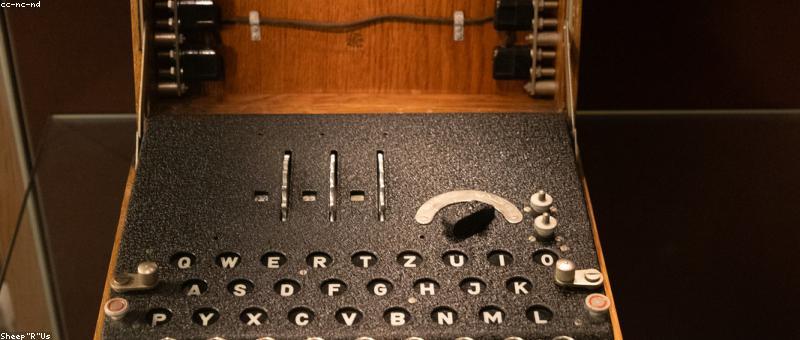
The roots of symmetric encryption stretch back thousands of years to the dawn of civilization. As early as 1900 BCE, Egyptian scribes were using crude substitution ciphers to conceal sensitive royal messages. The Spartans of ancient Greece famously used a scytale cipher to encrypt military dispatches, wrapping a parchment strip around a tapered rod to scramble the text. Even Julius Caesar had his own simple substitution cipher, shifting each letter a fixed number of positions in the alphabet.
These early encryption methods all shared a key attribute: the same secret "key" was used both to encrypt and decrypt the message. This symmetric approach, where the encryption and decryption processes are identical and reversible, would remain the dominant paradigm in cryptography for millennia.
The Genesis of Modern Symmetric Encryption
The 20th century saw an explosion of progress in symmetric cryptography, driven by the demands of two World Wars and the dawn of the information age. In 1917, American engineer Gilbert Vernam invented the one-time pad, an unbreakable symmetric cipher that used a truly random key as long as the message itself. While impractical for most uses, the one-time pad's mathematical inviolability became the gold standard for encryption.
During World War II, the famous Enigma machine used an intricate system of rotors and plugboards to encrypt German military communications with a symmetric algorithm. The Allies' eventual cracking of the Enigma code is considered one of the greatest intelligence coups in history, hastening the end of the war.
"The strength of a cipher depends entirely on keeping the key secret, not on keeping the algorithm secret." — Claude Shannon, legendary cryptographer
The FIPS 46 Standard and the Rise of DES
In 1977, the U.S. National Bureau of Standards (now NIST) published the FIPS 46 standard, specifying the Data Encryption Standard (DES) as the official government symmetric encryption algorithm. Based on an earlier IBM design, DES used a 56-bit key and a complex set of permutations and substitutions to scramble data. This became the de facto standard for commercial and financial encryption worldwide.
DES's reign was not without controversy, however. Rumors swirled that the NSA had secretly weakened the algorithm, and by the 1990s, increasingly powerful computers could brute-force crack a DES key in a matter of days. This led to the development of Advanced Encryption Standard (AES), a new symmetric cipher adopted as the FIPS 197 standard in 2001.


The Unbreakable Promise of AES
Unlike the aging DES, AES was designed from the ground up to be future-proof. With key sizes up to 256 bits, AES is estimated to be secure against all known attacks for the foreseeable future, even in the face of ever-increasing computing power and the advent of quantum computing. Today, AES is the most widely used symmetric encryption algorithm, securing everything from bank transactions to top-secret military communications.
But the story of symmetric encryption doesn't end there. Cutting-edge research into homomorphic encryption promises to take the concept even further, allowing calculations and processing to be performed on encrypted data without ever decrypting it. The implications for data privacy and cloud computing are staggering.
The Future of Symmetric Encryption
As the digital age marches on, the need for rock-solid data security has never been greater. Symmetric encryption algorithms like AES will undoubtedly remain the workhorse of cryptography, their speed and efficiency making them irreplaceable for real-world applications. But the field is far from static — new breakthroughs in quantum computing and homomorphic encryption could revolutionize the very foundations of secure communication.
One thing is certain: the ancient quest to conceal sensitive information will continue, with symmetric cryptography playing a central role in safeguarding our increasingly digital world.
Comments