Qubit Coherence
Peeling back the layers of qubit coherence — from the obvious to the deeply obscure.
At a Glance
- Subject: Qubit Coherence
- Category: Quantum Computing
- Key Concepts: Decoherence, Quantum Error Correction, Superconducting Qubits, Spin Qubits
- First Noticed: Early 2000s with advancements in superconducting circuit experiments
- Major Contributors: Michel Devoret, John Martinis, and Robert Schoelkopf

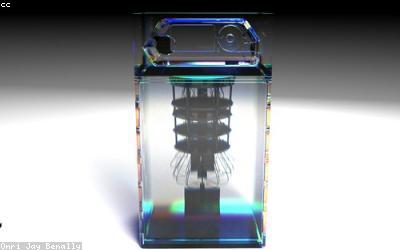
The Fragile Heart of Quantum Computation
Imagine a world where your computer's bits are not just 0s or 1s, but exist in a haze of possibility — simultaneously both. That’s the promise of quantum computing. But lurking behind that promise is a relentless adversary: qubit decoherence. It’s the reason your shiny new quantum computer might stumble at the worst moment.
Decoherence is not just a technical hiccup; it’s a fundamental barrier. It’s what causes qubits — those tiny quantum bits — to lose their quantum state, collapsing into classical reality. And the strangest part? Decoherence isn’t caused by a single villain, but by an army of tiny, unpredictable influences — thermal fluctuations, electromagnetic noise, even cosmic rays.
In the mid-2000s, researchers began noticing that qubits couldn’t hold their superpositions for more than a few microseconds — an eternity in classical computing but a blink in quantum terms. These fleeting moments dictated everything: how complex a quantum algorithm could be, and whether scalable quantum computers would ever exist.

The Superconducting Secrets and Spin Mysteries
Two dominant approaches battle to tame decoherence: superconducting circuits and spin qubits.
Superconducting qubits, pioneered by the labs of Michel Devoret and John Martinis, utilize tiny loops of superconducting material cooled to near absolute zero. Here, quantum information is stored in oscillating currents and voltages, delicately balanced. Yet, these circuits are highly sensitive to magnetic flux noise. Even a stray magnetic field or a microscopic defect in the substrate can cause a qubit to forget its quantum state in microseconds.
Meanwhile, spin qubits, often found in quantum dots or diamond NV centers, store information in the intrinsic angular momentum of electrons. Their coherence times have historically lagged behind superconducting counterparts, but recent advances with isotopically purified materials and ultra-clean fabrication have pushed them into the milliseconds realm — still short but promising.



The Unseen Saboteurs: Noise, Defects, and Cosmic Rays
Qubit decoherence is a masterclass in chaos. Thermal vibrations, electromagnetic interference, and microscopic defects in materials all conspire to collapse quantum superpositions. But the sneakiest culprit might be the cosmic ray.
"A single cosmic ray can flip a qubit’s state, destroying potentially thousands of calculations in an instant," explains Dr. Elena García, a pioneer in quantum error mitigation. In 2019, experiments revealed that high-energy particles striking the qubit environment caused transient decoherence events, sparking a new field of study: cosmic-ray effects on qubits.
Scientists have developed quantum error correction codes as a countermeasure, but these require many more physical qubits to protect a single logical qubit. It’s a bit like trying to repair a broken mirror with thousands of shards — complex, costly, and still imperfect.
The Race for Longer Coherence: Material Science and Novel Architectures
In the quest for qubits that can keep their superpositions longer, material science has become an arena of fierce innovation. Researchers are experimenting with topological qubits — qubits that leverage exotic states of matter immune to local noise. The hope? Decouple quantum information from local disturbances altogether.
Meanwhile, innovative designs like 3D superconducting cavities have doubled coherence times by isolating qubits within carefully engineered electromagnetic environments. These improvements are no accident; they’re the result of meticulous atomic-level engineering and an understanding that sometimes, a tiny defect can cause a quantum catastrophe.
Yet, even the most promising materials and architectures are vulnerable. As qubits evolve, so too does the understanding that coherence isn’t just about materials — it's about control, isolation, and the delicate dance of quantum states.
The Unexpected Ally: Quantum Error Correction and Noise Resilience
One of the most electrifying developments in recent years has been the advent of quantum error correction. It’s like building a quantum insurance policy, allowing qubits to preserve their state despite the chaos around them.
By encoding a single logical qubit into hundreds of physical qubits, scientists aim to detect and correct errors before they cause decoherence. This strategy has turned what once seemed like an insurmountable barrier into a manageable challenge.
What’s truly astonishing is that some emerging approaches — like biologically inspired quantum error mitigation — look to nature’s resilience to build more robust qubits. Could the secret to eternity lie in mimicking the stability of complex biological molecules?

The Future of Qubit Coherence: Chaos Meets Control
As we peer into the next decade, the battle against decoherence is far from over. But the horizon is bright. Advances in quantum materials, topological quantum computing, and next-gen error correction algorithms promise to push coherence times into seconds, minutes, perhaps beyond.
Some theorists speculate that entirely new physics — hidden in the depths of string theory or undiscovered quantum states — might hold the key. If so, the universe itself might be conspiring to help us master quantum coherence, one subtle effect at a time.
In the end, understanding and conquering qubit decoherence is not just a technical challenge; it’s a quest to tame the universe’s most delicate fabric — redefining what it means to compute, to understand reality, and perhaps, to unlock the secrets of existence itself.
Comments