Topological Quantum Computing
The deeper you look into topological quantum computing, the stranger and more fascinating it becomes.
At a Glance
- Subject: Topological Quantum Computing
- Category: Quantum Physics & Computation
- Estimated Development Timeline: 2010s – Present
- Key Figures: Alexei Kitaev, Michael Freedman, and Chetan Nayak
- Primary Focus: Exploiting topological states of matter to build fault-tolerant quantum computers
The Unexpected Power of Topology in Quantum Mechanics
Imagine a computer so resilient that its delicate quantum bits, or qubits, are shielded from the chaos of their environment by the very shape of space itself. That’s the promise of topological quantum computing. Unlike traditional quantum systems that are highly sensitive to external noise, topological approaches harness the mysterious properties of space’s geometry to keep information intact, even in the face of disturbances.
This isn’t just theoretical fancy. It’s rooted in the peculiar world of topological phases of matter, where electrons dance to rules so strange they defy our everyday intuition. Here, particles called anyons braid around each other, creating states of matter that are inherently resistant to errors. Wait, really? Yes. These braids encode information not in local states, but in the global configuration — making them virtually immune to the slightest local perturbation.
The Birth of a Radical Idea: From Abstract Math to Quantum Hardware
The seeds of topological quantum computing were sown in the late 1990s, when physicists like Alexei Kitaev proposed using non-abelian anyons to encode qubits. Unlike conventional particles, these anyons' properties depend on how they are braided around each other, not just their positions. This meant information could be stored in the braiding patterns themselves, rather than in fragile quantum states vulnerable to decoherence.
Initially dismissed as purely theoretical, experimental breakthroughs in the 2010s suggested that Majorana zero modes — quasi-particles believed to behave as non-abelian anyons — could be realized in nanowire-superconductor hybrids. The race was on. Suddenly, topological quantum computing was no longer a distant dream but a tangible goal.
"If we can manipulate these braids with precision, we will have a new kind of quantum computer — one that’s inherently protected from errors,"
Why Error Correction is a Game Changer
In standard quantum computers, errors are the eternal enemy. Tiny disturbances can scramble qubits, forcing complex error-correction protocols that gobble up resources. But topological qubits, by their nature, are resistant to local errors. This is because the information is stored globally — locked into the topology of the system, not just a fragile quantum state.
Think of it like a knot in a rope: as long as you don’t untie the knot, the specific twists and turns encode the information. No matter how much you shake the rope, the knot remains. This robustness could slash the overhead needed for error correction — potentially paving the way for scalable, practical quantum computers.
The Experimental Frontiers: Building Topological Qubits
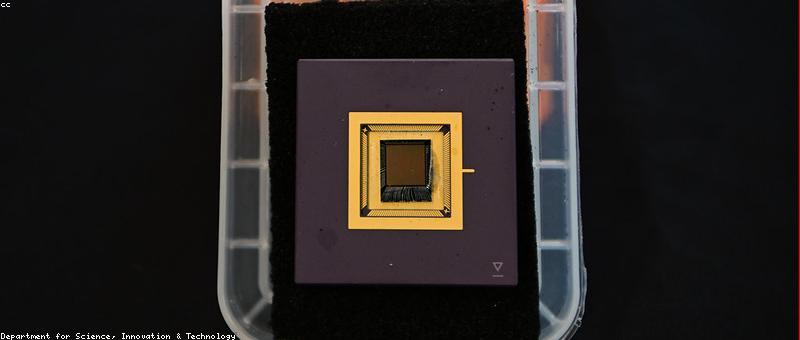
Realizing topological qubits isn’t straightforward. It involves engineering materials at the atomic level to host non-abelian anyons. In labs across the globe — Quantum Hall systems, semiconductor-superconductor hybrids, and topological insulators — scientists are testing the boundaries of material science.
One striking development came in 2018, when a team at Microsoft announced the successful detection of Majorana modes in their topological qubit prototypes. These are tiny, delicate structures, but they represent the first step toward building a scalable topological quantum computer. The challenge now? Controlling and braiding these particles reliably at scale.
"The physics is intricate, but the potential payoff is enormous — fault-tolerant quantum computing that could revolutionize cryptography, drug discovery, and complex modeling,"
Potential and Pitfalls: The Road Ahead
While topological quantum computing promises incredible resilience, the path isn’t free of hurdles. Creating stable non-abelian anyons requires ultra-low temperatures, pristine materials, and precise control — factors that currently limit scalability. Moreover, braiding operations demand nanometer precision, akin to threading a needle in a hurricane.
Yet, the potential upside drives relentless innovation. Major tech firms — Google, Microsoft, IBM — are investing billions into topological approaches, betting that these elusive particles will unlock a new era of computing power. If successful, they could solve problems that today’s supercomputers can only dream of — like cracking complex molecular simulations or optimizing global logistics in real time.
Interestingly, some theorists argue that the universe itself might host naturally occurring topological qubits, hinting at a profound connection between quantum information and the fabric of spacetime. What if the cosmos is quietly braiding its own particles — just waiting for us to learn how to read the patterns?
Comments