Quantum Computing Advancements
An exhaustive look at quantum computing advancements — the facts, the myths, the rabbit holes, and the things nobody talks about.
At a Glance
- Subject: Quantum Computing Advancements
- Category: Technology, Computer Science, Physics
The Race to Quantum Supremacy
The quest for quantum supremacy has been underway for decades, with tech giants and research labs around the world engaged in a high-stakes race to develop the first large-scale, general-purpose quantum computer. In 2019, Google claimed to have achieved quantum supremacy with its Sycamore processor, performing a calculation in just 200 seconds that would have taken the world's fastest classical supercomputer 10,000 years to complete. This milestone sparked both excitement and skepticism, as the scientific community debated the significance and implications of Google's claim.
From tech giants like Google, IBM, and Microsoft, to cutting-edge startups and university research labs, the global competition to build the first practical quantum computer has intensified in recent years. With billions of dollars in investment and the promise of transformative breakthroughs in fields like cryptography, chemistry, and materials science, the race to quantum supremacy has taken on an almost geopolitical urgency.

The Challenges of Quantum Computing
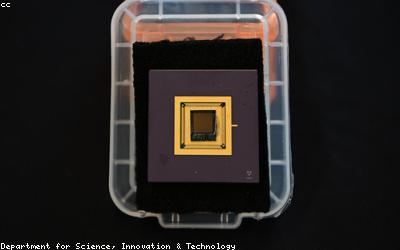
Despite the rapid progress, quantum computing still faces significant technical hurdles. Maintaining the delicate quantum states required for computation is incredibly difficult, as even the slightest interaction with the outside world can cause the system to "decohere" and lose its quantum properties. This fragility has made it challenging to scale up quantum processors beyond just a few qubits (the quantum equivalent of classical bits).
Another major challenge is the problem of quantum error correction. Quantum systems are inherently noisy and prone to errors, and developing robust error-correction techniques is crucial for building reliable, fault-tolerant quantum computers. Researchers are exploring various approaches, such as surface codes and topological quantum computing, to address this challenge.
"Quantum computing is not a solved problem. We're still in the very early stages, and there are many significant technical hurdles that need to be overcome before we can realize the full potential of this technology." - Dr. Hartmut Neven, Director of Quantum Computing at Google




The Quantum Software Revolution
As the hardware of quantum computing advances, an equally important challenge is the development of quantum software and algorithms. Quantum computers will require a completely new paradigm of programming, as traditional algorithms and software designed for classical computers may not be suitable for the quantum realm.
Researchers are working on developing quantum-specific programming languages, software frameworks, and algorithms that can take advantage of the unique properties of quantum systems, such as superposition and entanglement. One of the most promising areas is the field of quantum algorithms, which could potentially provide exponential speedups over classical algorithms for certain problems, such as integer factorization and database search.




The Potential Impact of Quantum Computing
If the challenges of quantum computing can be overcome, the potential impact of this technology is truly transformative. Quantum computers could revolutionize fields such as cryptography, drug discovery, materials science, optimization problems, and financial modeling, among others.
One of the most significant implications of quantum computing is its potential impact on cryptography and cybersecurity. Quantum computers could potentially break many of the public-key cryptographic algorithms that underpin the security of the internet and digital communications. This has led to a growing interest in post-quantum cryptography, which aims to develop new encryption methods that are resistant to quantum attacks.
Google's 2019 claim of quantum supremacy sparked a heated debate within the scientific community. While some experts hailed it as a major breakthrough, others argued that the task performed by the Sycamore processor, while impressive, was too narrow and specific to be considered true quantum supremacy. The debate continues as researchers work to define the elusive goal of a general-purpose quantum computer that can outperform classical supercomputers on a wide range of practical problems.

The Future of Quantum Computing
Despite the significant challenges, the future of quantum computing remains highly promising. As research and development continue to progress, experts believe that we will see continued advancements in quantum hardware, software, and algorithms, leading to ever-more-powerful and versatile quantum computers.
Some of the key milestones that quantum computing experts are working towards include:
- Achieving true quantum supremacy – the ability of a quantum computer to outperform the world's best classical supercomputers on a wide range of practical problems
- Developing fault-tolerant quantum computing – the ability to correct errors and maintain quantum states reliably for long periods of time
- Scaling up quantum processors to hundreds or thousands of high-quality qubits, enabling the realization of transformative quantum applications
- Advancing quantum software and algorithms to fully harness the power of quantum computers for real-world problems
As the race to quantum supremacy continues, the future of computing hangs in the balance. The successful development of large-scale, general-purpose quantum computers could usher in a new era of scientific discovery and technological innovation, with profound implications for our world.
Comments