Quantum Algorithms
Most people know almost nothing about quantum algorithms. That's about to change.
At a Glance
- Subject: Quantum Algorithms
- Category: Computer Science, Quantum Computing
The Quantum Computing Revolution
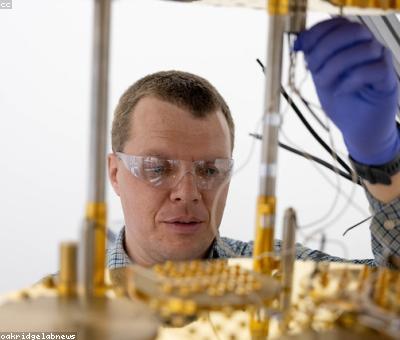
Quantum computing has long been the stuff of science fiction, but in the past decade it has shifted from fantasy to reality. Advances in quantum hardware, particularly the development of stable quantum bits (qubits), have brought the dream of a quantum computer within reach. But the true power of quantum computing lies not in the hardware, but in the algorithms that can harness its unique properties.


Shor's Algorithm: Cracking Encryption
One of the most famous and important quantum algorithms is Shor's algorithm, developed by mathematician Peter Shor in 1994. Shor's algorithm is capable of factoring large numbers exponentially faster than any classical algorithm. This has profound implications for cryptography, as the security of many encryption schemes relies on the difficulty of factoring large numbers.
In a classical computer, factoring large numbers becomes computationally infeasible as the numbers get bigger. But Shor's algorithm, running on a quantum computer, could potentially break even the strongest encryption standards in use today, such as RSA. This has sparked an urgent race to develop "post-quantum" encryption schemes that are resistant to quantum attacks.
"If you could take a classical computer and run Shor's algorithm on it, you'd be able to break every public-key cryptosystem we know about today." - Peter Shor


Quantum Supremacy and Beyond
In 2019, Google's Sycamore quantum processor achieved "quantum supremacy" by performing a calculation in 200 seconds that would take the world's fastest supercomputer 10,000 years to complete. This was a landmark demonstration that quantum computers can outperform classical computers on certain specialized tasks.
But the real promise of quantum computing lies not in raw speed, but in the ability to tackle fundamentally different types of problems. Quantum algorithms have the potential to revolutionize fields like cryptography, materials science, drug discovery, and optimization problems that are intractable for classical computers.


The Quantum Algorithm Toolbox
While Shor's algorithm is the most famous quantum algorithm, it's just the tip of the iceberg. Researchers have developed a growing toolbox of quantum algorithms that exploit the unique properties of quantum mechanics:
- Quantum Fourier Transform - Enables fast solutions to problems like factoring and period finding.
- Grover's Algorithm - Provides quadratic speedup for unstructured search problems.
- Quantum Simulation - Allows efficient simulation of quantum mechanical systems.
- Quantum Machine Learning - Potential speedups for certain machine learning tasks.
As quantum hardware continues to improve, the race is on to develop practical, fault-tolerant quantum algorithms that can unlock the full potential of this transformative technology.
The Challenges Ahead
While the promise of quantum computing is immense, significant technical challenges remain before we can realize its full potential. Chief among these is the problem of quantum error correction - the ability to protect fragile quantum states from the inevitable errors and noise that creep into real-world quantum systems.
Another key challenge is understanding the complexity and limitations of quantum algorithms. Researchers are still working to map the boundaries of what can and cannot be accomplished with quantum computers, compared to classical computers.

The Future of Quantum Algorithms
Despite the obstacles, the future of quantum algorithms is bright. As quantum hardware continues to improve, researchers are poised to unlock an entirely new frontier of computational power. From cracking the world's most advanced encryption to revolutionizing fields like materials science and drug discovery, quantum algorithms will reshape our world in ways we can scarcely imagine.
The race is on to develop the quantum algorithms that will power the computers of tomorrow. The possibilities are as mind-bending as quantum mechanics itself.
Comments