Logarithmic Spirals
An exhaustive look at logarithmic spirals — the facts, the myths, the rabbit holes, and the things nobody talks about.
At a Glance
- Subject: Logarithmic Spirals
- Category: Mathematics & Natural Phenomena
- First Described: 17th century, by Jacob Bernoulli
- Key Characteristics: Self-similar, constant angle of growth
The Geometry That Defies Expectation
Imagine a spiral that, no matter how much you zoom in or out, looks the same. That’s the hypnotic magic of a logarithmic spiral. Unlike the familiar Archimedean spiral, which maintains a constant distance between turns, the logarithmic spiral expands exponentially, creating a curve that is self-similar — a shape that looks identical at every scale.
Discovered by Jacob Bernoulli in 1694, this curve appears in the most astonishing places — from the tiny shells of nautilus shells to the spiral arms of galaxies. Bernoulli famously called it the "Spira mirabilis," or "miraculous spiral," because it embodies a perfect blend of beauty, mathematics, and natural utility.
But what makes this curve so special? It’s all about angle. Every point on a logarithmic spiral maintains a constant angle between the tangent and radial line from the center. This angle, called the growth angle, can range from almost zero to ninety degrees, shaping the spiral’s tightness or openness.
Nature’s Infinite Repetition: Shells, Galaxies, and Hurricanes
The universe seems obsessed with logarithmic spirals. The shells of mollusks — nautilus and sea snails — grow in perfect logarithmic spirals, allowing them to expand without changing shape. Every chamber adds to the shell’s beauty while adhering to the same growth pattern, an elegant solution encoded by evolution itself.
But the universe’s love affair with this shape isn’t limited to shells. The majestic spiral galaxies — including the famous Milky Way — manifest their arms as logarithmic spirals. Astronomers have analyzed star distributions, revealing that the angle of these arms remains remarkably constant across vast cosmic distances. Wait, really? This consistency hints at some fundamental rule governing galactic formation.
"The logarithmic spiral appears to be an almost universal blueprint — found on the microscopic and cosmic scales alike."
Even weather phenomena obey the rule. The arms of hurricanes often follow a logarithmic pattern, wrapping around their centers in a spiral that maintains a constant angle, contributing to their deadly efficiency.
The Mathematical Beauty Behind the Spiral
At its core, the equation of a logarithmic spiral in polar coordinates is elegantly simple: r = ae^{bθ}. Here, a controls the initial size, b dictates the rate of expansion, and θ is the angle. This formula unlocks the spiral’s secret: exponential growth coupled with rotational symmetry.
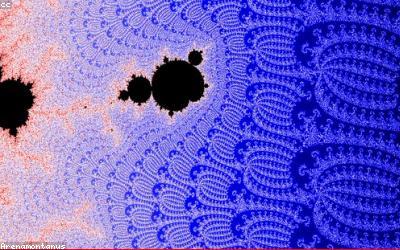
One of the most astonishing facts? The self-similarity property means that scaling a logarithmic spiral by a factor results in the same shape — it's fractal in nature. This is why zooming into a nautilus shell or a galaxy reveals patterns that seem eerily familiar.
Mathematicians have also linked these spirals to Fibonacci sequences, noticing that the ratios of successive Fibonacci numbers approximate the golden ratio — another spiral favorite. But the true power lies in their universality: from the micro to the macro, they are the fabric of growth itself.

The Hidden Secrets and Myths of Logarithmic Spirals
Despite their elegant simplicity, logarithmic spirals are shrouded in myths. One persistent legend claims that ancient civilizations used the shape for architectural marvels because of its divine proportions. Not quite — these spirals often appeared in nature long before humans discovered them, and their use in architecture is more about aesthetic harmony than mathematical necessity.
Another myth is that the spiral's constant angle has some mystical power — an idea popularized by spiral mysticism. In truth, the mathematics is purely descriptive; the shape emerges naturally through growth processes driven by physical laws, not mystical energies.
But, wait, really? The fact that such a simple curve can describe galaxies, shells, hurricanes, and even the distribution of galaxies hints at an underlying order — perhaps a hidden code of nature itself.
Why Logarithmic Spirals Are the Ultimate Shape of Growth
Nature seems obsessed with efficiency, and logarithmic spirals embody it perfectly. They allow structures to expand while maintaining structural integrity and aesthetic balance. In essence, they are the shape of perfect growth.
Think of the patterns of sunflower seeds, which often follow logarithmic spirals to maximize packing efficiency. Or the formation of spiral arms that suggest a natural tendency toward stable, self-replicating patterns.
Some scientists argue that these spirals are not just beautiful but fundamental. They may be the universe’s default mode of expansion — an elegant, self-similar template that underpins the fabric of reality itself.
Comments