Spiral Galaxies
A comprehensive deep-dive into the facts, history, and hidden connections behind spiral galaxies — and why it matters more than you think.
At a Glance
- Subject: Spiral Galaxies
- Category: Astrophysics
- Discovery: Early 20th century with Edwin Hubble’s classification system
- Size Range: 10,000 to 300,000 light-years across
- Mass: Up to 1 trillion times the mass of the Sun


The Hidden Architecture of the Cosmos
When you gaze up at the night sky, the swirling, luminous arms of spiral galaxies seem almost hypnotic — like cosmic whirlpools pulling in starlight. But beneath their mesmerizing beauty lies an intricate structure that has fascinated astronomers for over a century. These galaxies aren’t just pretty shapes; they’re dynamic, evolving systems governed by gravitational choreography and cosmic history.
In the early 20th century, astronomer Edwin Hubble revolutionized our understanding by classifying galaxies into spirals, ellipticals, and irregulars. Spiral galaxies, in particular, stood out because of their distinct, pinwheel-like arms. What’s truly astonishing? Despite their delicate appearance, these arms contain billions of stars, gas, dust, and dark matter — all dancing to gravitational tunes that stretch across millions of light-years.
The Birth of the Beautiful: How Spiral Galaxies Form
The story of spiral galaxies begins in primordial cosmic dust and gas clouds, swirling in the aftermath of the Big Bang. Over billions of years, gravity pulled these particles into dense knots — proto-galaxies — that would eventually evolve into the majestic spirals we observe today. But here’s the twist: the formation isn’t a gentle process.
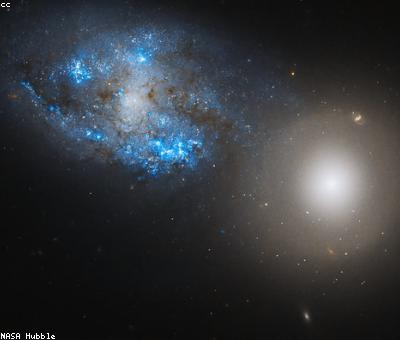
Recent simulations suggest that spiral arms are density waves — regions of higher star density that move through the galaxy’s disk like traffic jams on a highway. Stars form within these regions, lighting up the arms with clusters of young, bright stars. This process is so efficient that in some galaxies, star formation can occur at a rate of hundreds of solar masses per year.
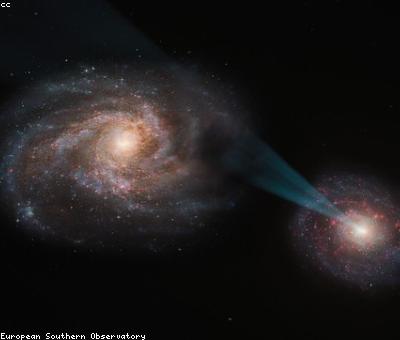
The Role of Dark Matter: The Invisible Scaffold
One of the most startling discoveries about spiral galaxies is that their visible mass accounts for only a fraction of their total mass. The majority is dark matter — an elusive, non-luminous substance that exerts gravitational pull but doesn't emit or absorb light. Without dark matter, the arms would fly apart under the galaxy’s rotation.
Measurements show that stars at the edges of spiral galaxies orbit much faster than their visible mass can account for — some exceeding 200 km/s. This discrepancy, first identified in the 1970s by astronomers like Vera Rubin, was a pivotal moment, confirming dark matter’s role in galaxy stability.
"Dark matter is the unseen glue holding spiral galaxies together. Without it, these cosmic whirlpools would disintegrate." – Dr. Lisa Gomez, astrophysicist

The Dynamic Life of Spiral Arms
Unlike static structures, spiral arms are transient yet recurrent features. They can last hundreds of millions of years but are constantly evolving, merging, and dissipating. Galaxy interactions — close encounters and mergers — often trigger new spiral patterns or intensify existing ones.
Take the Milky Way, our home galaxy. It’s on a slow collision course with the Andromeda galaxy, predicted to merge in about 4.5 billion years. Such interactions can create spectacular spiral structures, or even transform galaxies into elliptical forms, stripping away their arms in a cosmic upheaval.


Why Spiral Galaxies Are the Universe’s Time Capsules
Spiral galaxies are not just pretty objects; they’re the universe’s history books. Their arms contain stellar populations spanning billions of years, from ancient, red, low-mass stars to vibrant, blue, massive ones. Studying their composition reveals how galaxies evolve, how stars form and die, and how the universe itself has changed over cosmic time.
Moreover, spiral galaxies are hubs of planet formation. Our own solar system resides within the Milky Way’s Orion Arm, a minor yet significant spiral arm. Understanding how these arms foster environments for planetary systems helps us grasp the potential for life elsewhere.
The Surprising Diversity Among Spiral Galaxies
Not all spiral galaxies look alike. They range from grand-design spirals, with well-defined, majestic arms (like the Sombrero Galaxy), to flocculent spirals, with patchy, fragmented arms. Their central bulges can be tiny or enormous, and the number of arms varies from two to many.
Galaxies like NGC 1300 exhibit perfect symmetry, while others, like ESO 510-G016, display irregular, asymmetric patterns — reminders that cosmic beauty is as chaotic as it is elegant.
The Future of Spiral Galaxies: Fate Written in the Stars
Scientists agree that the universe’s expansion means many spiral galaxies will continue to drift apart. However, local interactions — like the predicted Milky Way-Andromeda merger — will dramatically reshape their appearance, forging new, colossal elliptical galaxies. The arms will fade, but the stellar remnants will continue to orbit in new, complex arrangements.
Interestingly, some galaxies may remain as elegant spirals for hundreds of millions of years, serving as cosmic lighthouses that guide our understanding of galactic evolution.
Comments