Geometry In Architecture
The deeper you look into geometry in architecture, the stranger and more fascinating it becomes.
At a Glance
- Subject: Geometry In Architecture
- Category: Architectural Design & Geometry
- First Known Use: Ancient Egypt, circa 3000 BCE
- Key Concepts: Symmetry, the Golden Ratio, Fractals, Geodesics
- Influential Architects: Le Corbusier, Antoni Gaudí, Zaha Hadid
- Modern Applications: Parametric Design, Sustainable Structures, Urban Planning
The Secret Geometry of Ancient Monuments
Take a moment to consider the Great Pyramid of Giza. Built around 2560 BCE, its precise dimensions embody more than mere craftsmanship — they encode complex geometric principles that continue to puzzle scholars today. Some researchers suggest the pyramid's proportions are aligned with the Golden Ratio, a mathematical constant approximately 1.618, celebrated for its aesthetic harmony. Yet, evidence points to even deeper geometric secrets lurking within its stones, like hidden Fibonacci sequences embedded in its layout.
But here's the kicker: early Egyptian builders employed a form of geometric thinking that predates modern mathematics. They used simple tools — cords and sticks — to construct shapes with extraordinary accuracy, echoing principles seen in geometry in architecture today. This deliberate harmony between art and science hints at a universal human instinct: that beauty arises from mathematical order.
Le Corbusier and the Modular Myth
Fast forward to the 20th century, where the Swiss-French architect Le Corbusier revolutionized architectural thinking with his obsession for geometry. His Modulor system — an intricate scale based on human measurements and the Fibonacci sequence — aimed to create spaces that resonate with the human body. The result? Buildings that feel intuitively right, almost as if they breathe with geometric harmony.
Yet, some critics argue that Le Corbusier’s obsession with geometric proportions was more than aesthetic — it was a quest for universal order amidst chaos. His designs, like the Notre Dame du Haut chapel, demonstrate how geometry could transform abstract mathematical concepts into emotionally compelling spaces. It's a reminder that geometry isn't just math; it's a language of human experience.
Antoni Gaudí: Nature’s Architect and Geometric Genius
No discussion of geometry in architecture is complete without mentioning Antoni Gaudí. His masterpieces in Barcelona, from the Sagrada Família to Park Güell, are living proof that nature’s patterns can inspire structures that defy convention.
"Gaudí saw geometry not as a set of rules but as a living, breathing language," explains Dr. Maria Soler, a historian of Catalan architecture. "He used hyperboloids, paraboloids, and catenary arches to mimic natural forms, creating organic structures that seem to grow from the ground itself."
What makes Gaudí's work astonishing is his mastery of geometric abstraction. He employed ruled surfaces — shapes formed by straight lines — that appear fluid yet are rooted in rigorous mathematical principles. His use of the catenary curve, the shape a chain naturally adopts under gravity, revolutionized how bridges and domes could be constructed.

The Fractal Nature of Modern Design
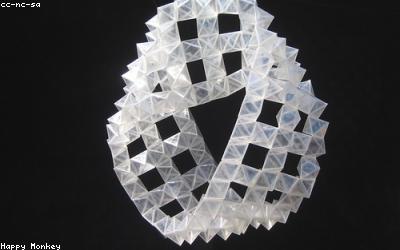
Jumping to today, fractals — repeating geometric patterns that scale infinitely — are everywhere in architecture. Think of the intricate facades of Zaha Hadid's fluid structures or the self-similar patterns of the Eden Project in Cornwall.
Fractals aren’t just aesthetic. They contribute to sustainable design by optimizing natural light, airflow, and structural integrity. Architects have embraced fractal architecture as a way to mimic nature’s resilience, resulting in buildings that feel alive, adaptable, and mesmerizing.
One startling example is the geodesic dome, popularized by Buckminster Fuller. Its complex network of triangles distributes stress evenly, enabling enormous spans with minimal material — an elegant geometric solution to a logistical challenge.
Parametric Design: The Future of Geometric Innovation
Today’s architects are pushing geometric boundaries through parametric design. Using advanced algorithms and computational power, they generate forms that would be impossible to conceive manually. Think twisting towers like Dubai’s Cayan Tower or the flowing curves of the Heydar Aliyev Center in Baku — each a testament to the power of geometric algorithms.
Behind these mesmerizing shapes lies a sophisticated dance of variables — angles, curves, and ratios — that respond dynamically to environmental data or aesthetic preferences. This marriage of math and art has unlocked new realms of possibility, transforming the skyline into a living, breathing geometric playground.
The Unseen Geometry of Urban Planning
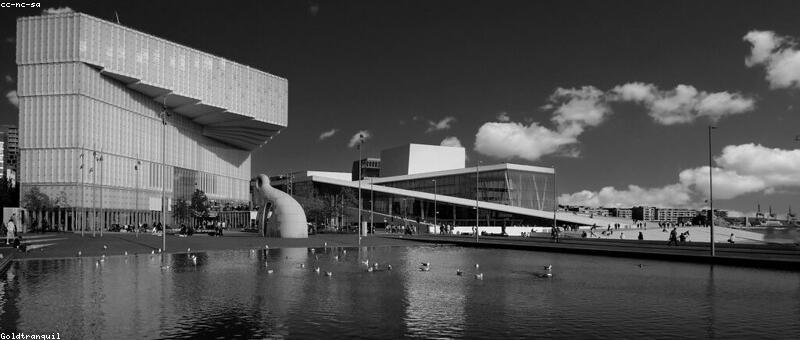
Finally, the influence of geometry extends beyond individual buildings to entire cities. Urban planners leverage geometric principles to optimize traffic flow, public space placement, and green areas. The layout of Le Corbusier’s Plan Voisin in Paris was a radical example — dividing the city into geometric zones to facilitate movement and sunlight.
Modern smart cities, like Singapore’s urban grid, use complex geometric algorithms to maximize efficiency and sustainability. These patterns aren’t arbitrary — they’re based on precise mathematical models designed to make urban life more harmonious.
Comments