Cryptographic Primitives
How cryptographic primitives quietly became one of the most fascinating subjects you've never properly explored.
At a Glance
- Subject: Cryptographic Primitives
- Category: Computer Science, Cryptography
When you think about it, cryptographic primitives are absolutely essential to the functioning of the modern digital world. Without them, the entire internet economy, banking system, and critical infrastructure would grind to a halt. These are the fundamental building blocks that enable secure communication, authentication, and data integrity. Yet, most people have never heard of them.
The Vital Role of Cryptographic Primitives
Cryptographic primitives are the low-level algorithms and functions that form the backbone of all modern cryptography. These include things like hash functions, block ciphers, stream ciphers, and public-key primitives. They are the fundamental mathematical operations that allow us to encrypt data, verify digital signatures, and prove the authenticity of digital transactions.
For example, the AES algorithm is a widely-used cryptographic primitive that transforms plaintext into ciphertext in a secure and reversible way. The SHA-256 hash function is another critical primitive that can compress any amount of data into a fixed-length "digital fingerprint." These building blocks are used in countless applications, from HTTPS web encryption to Bitcoin's blockchain.


The Complex History of Cryptographic Research
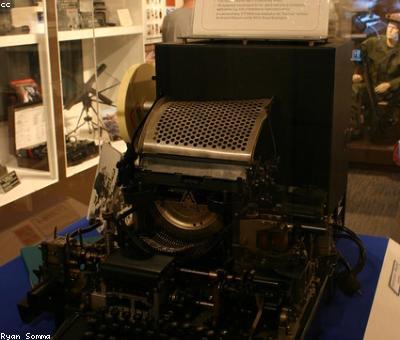
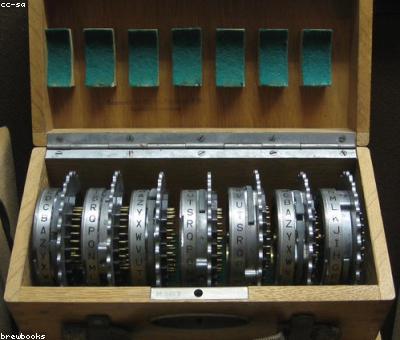
The field of cryptographic primitives has a rich and often secretive history. Many of the most important breakthroughs happened behind the closed doors of government intelligence agencies and university mathematics departments. The Enigma machine used by the Nazis in World War II, for example, was finally cracked thanks to groundbreaking work in cryptanalysis by pioneers like Alan Turing.
In the 1970s, the U.S. government sparked a revolution in public-key cryptography with the invention of the RSA algorithm. This allowed for secure communication without the need for a pre-shared secret key, paving the way for secure internet protocols like SSL/TLS. The development of elliptic curve cryptography in the 1980s and 1990s further expanded the possibilities of public-key systems.
"Cryptography is the language of the hidden. It is a language in which all people and nations desire to communicate with one another." - David Kahn, historian and author of "The Codebreakers"


The Ongoing Search for Quantum-Resistant Primitives
As powerful quantum computing edges closer to reality, there is growing concern that many of our current cryptographic primitives could be rendered obsolete. Quantum computers would be able to break the mathematical problems that underpin RSA, elliptic curves, and other widely-used public-key systems.
This has sparked an international race to develop new, quantum-resistant cryptographic primitives that can withstand the incredible processing power of future quantum machines. Candidates like lattice-based cryptography and multivariate cryptography are being intensely studied and tested.



The Surprising Applications of Cryptographic Primitives
While cryptographic primitives are often associated with protecting sensitive communications and financial transactions, their applications go far beyond the realm of traditional security. Cutting-edge research is exploring how these fundamental building blocks can enable powerful new capabilities.
For instance, homomorphic encryption allows computations to be performed directly on encrypted data, without the need to first decrypt it. This could revolutionize cloud computing by allowing sensitive data to be processed on remote servers without compromising privacy. Zero-knowledge proofs, another fascinating primitive, can demonstrate the validity of a statement without revealing any additional information.
Cryptographic primitives are also finding creative uses in fields like blockchain technology, secure multi-party computation, and differential privacy. As our digital world becomes ever more complex, the versatility of these fundamental cryptographic building blocks will only continue to grow.

The Unsung Heroes of the Digital Age
While the general public may be unaware of cryptographic primitives, these silent workhorses are the backbone of the modern information age. Without their secure, reliable, and efficient mathematical underpinnings, our digital world would simply not function.
From enabling online banking and e-commerce to protecting critical infrastructure and state secrets, cryptographic primitives are the unsung heroes that keep our networked society running smoothly. As the world becomes increasingly reliant on digital systems, the vital importance of these low-level cryptographic building blocks will only continue to grow.
Comments