The Legacy Of Occupy Wall Street And The Fight Against Economic Inequality
Everything you never knew about the legacy of occupy wall street and the fight against economic inequality, from its obscure origins to the surprising ways it shapes the world today.
At a Glance
- Subject: The Legacy Of Occupy Wall Street And The Fight Against Economic Inequality
- Category: Politics, Economics, Activism, Social Movements
In the summer of 2011, a small group of activists in New York City decided to take a stand against the growing economic inequality that was tearing their city – and the entire country – apart. What started as a modest protest in Zuccotti Park soon exploded into a nationwide movement that captivated the world.
The Spark That Ignited A Movement
It began with a post on the Vancouver-based Adbusters magazine website, calling for a protest against Wall Street on September 17, 2011. The authors, a group of Canadian activists and cultural jammers, were fed up with the widening gap between the rich and poor – a gap that had only worsened in the aftermath of the 2008 financial crisis. Their rallying cry was simple but powerful: "Occupy Wall Street."
When the date arrived, a few hundred protesters showed up in the financial district of New York City, determined to make their voices heard. Over the next few weeks, the numbers swelled dramatically as people from all walks of life – students, workers, the unemployed, the elderly – converged on Zuccotti Park, just a stone's throw from the New York Stock Exchange.



A Grassroots Juggernaut
The protesters refused to leave, even as the New York Police Department attempted to clear the park on several occasions. Tents sprang up, a kitchen was established to feed the growing crowds, and a vibrant community took shape. Occupy Wall Street was no longer just a protest – it was a living, breathing experiment in direct democracy.
"We are the 99%. We are getting kicked out of our homes. We are forced to choose between groceries and rent. We are working longer hours for less pay. We are getting nothing while the other 1% is getting everything." - Occupy Wall Street slogan
The movement's decentralized, leaderless structure allowed it to spread rapidly across the country. Within a matter of weeks, "Occupy" encampments had sprung up in hundreds of cities, from Los Angeles to Boston to Seattle. The protesters shared a common grievance – the belief that the economic system was rigged in favor of the wealthy elite – and a determination to challenge the status quo.

A Lasting Impact
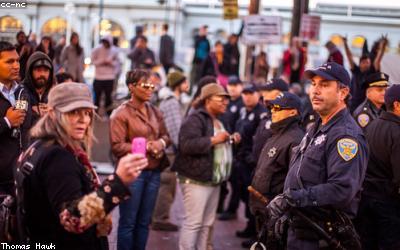
While the Occupy Wall Street camps were eventually dismantled by authorities, the movement's impact continues to be felt today. It helped to shift the national conversation, bringing issues of wealth inequality and corporate power to the forefront of public discourse. The phrase "We are the 99%" became a rallying cry, crystallizing the frustrations of millions of Americans.
Moreover, the tactics pioneered by Occupy – the use of public spaces as sites of protest, the emphasis on horizontal decision-making, the embrace of creative direct action – have been adopted by countless other social movements, from Black Lives Matter to the pro-democracy protests in Hong Kong.

Lessons Learned
While Occupy Wall Street did not achieve all of its goals, it served as a crucial wake-up call, spotlighting the deep-seated inequities that plague the American economic system. Its legacy has been to inspire ongoing efforts to build a more just, equitable, and democratic society – one that works for the many, not just the privileged few.
Comments