The Future Of Quantum Computing And Its Impact On Cryptography
The complete guide to the future of quantum computing and its impact on cryptography, written for people who want to actually understand it, not just skim the surface.
At a Glance
- Subject: The Future Of Quantum Computing And Its Impact On Cryptography
- Category: Technology, Cryptography, Quantum Computing
Quantum computing is no longer just a distant dream – it is quickly becoming a reality that will reshape the future of technology and cryptography as we know it. As quantum computers grow more powerful and sophisticated, they will pose a grave threat to the encryption methods we rely on today, potentially rendering them useless. But this looming quantum threat also presents an exciting opportunity to develop innovative new cryptographic techniques that can withstand the incredible processing power of quantum machines.


The Quantum Threat to Modern Cryptography
The backbone of modern digital security is public-key cryptography, which uses mathematical problems that are difficult for classical computers to solve. This includes algorithms like RSA and Elliptic Curve Cryptography (ECC), which underpin everything from online banking to secure communications. However, quantum computers have the potential to crack these algorithms with relative ease, thanks to Shor's algorithm – a quantum computing technique that can efficiently solve the integer factorization and discrete logarithm problems that RSA and ECC rely on.
Security experts estimate that large-scale quantum computers could be able to break RSA and ECC encryption within the next 10-20 years. This has led to a global effort to develop "quantum-resistant" cryptographic algorithms that can withstand the power of quantum computing.
Towards a Quantum-Resistant Future
To prepare for the coming quantum threat, the U.S. National Institute of Standards and Technology (NIST) launched a competition in 2016 to identify and standardize new quantum-resistant public-key cryptographic algorithms. After evaluating dozens of submissions from around the world, NIST has selected four finalists that are now undergoing further analysis and testing.
These quantum-resistant algorithms, known as "post-quantum cryptography," rely on different mathematical problems that are believed to be difficult for both classical and quantum computers to solve. Some of the leading contenders include:
- Lattice-based Cryptography, which uses the complexity of finding short vectors in high-dimensional lattices
- Hash-based Cryptography, which derives its security from the properties of cryptographic hash functions
- Multivariate Cryptography, which exploits the difficulty of solving systems of quadratic equations over finite fields
"The transition to quantum-resistant cryptography is one of the most important challenges facing the cybersecurity community today. Failure to address this threat could have devastating consequences for the security of our digital infrastructure." - Dr. Atefeh Mashatan, Cryptography Expert and Professor at Ryerson University
Implementing Quantum-Resistant Cryptography
As the NIST standardization process continues, organizations around the world are already working to implement post-quantum cryptography into their systems. This transition will be complex and require significant planning and coordination, as quantum-resistant algorithms may have different performance characteristics and integration requirements compared to the cryptographic standards in use today.
In addition to the technical challenges, the widespread adoption of quantum-resistant cryptography will also require global cooperation and the alignment of policies and standards across governments, industry, and the broader cybersecurity community. Failure to address this threat in a coordinated and proactive manner could leave critical systems and infrastructure vulnerable to attack.

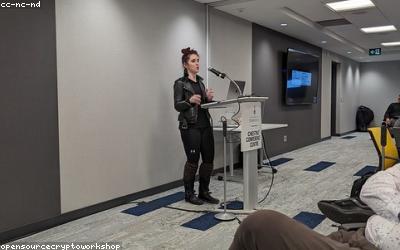
The Future of Cryptography in the Quantum Age
As quantum computing continues to advance, the need for quantum-resistant cryptography will only become more urgent. While the transition will be complex, the investment in developing these new cryptographic techniques represents a significant opportunity to future-proof our digital security and ensure the continued reliability of the technologies we depend on.
By staying ahead of the quantum threat, we can not only protect against the risks of quantum computing, but also unlock new possibilities for secure communication, data storage, and cryptographic applications that leverage the unique properties of quantum mechanics. The future of cryptography in the quantum age promises to be both challenging and transformative.
Comments