The Antikythera Mechanism And The Origins Of Computational Technology
The untold story of the antikythera mechanism and the origins of computational technology — tracing the threads that connect it to everything else.
At a Glance
- Subject: The Antikythera Mechanism And The Origins Of Computational Technology
- Category: Technology, Ancient History, Archaeology
A Technological Marvel from the Ancient Mediterranean
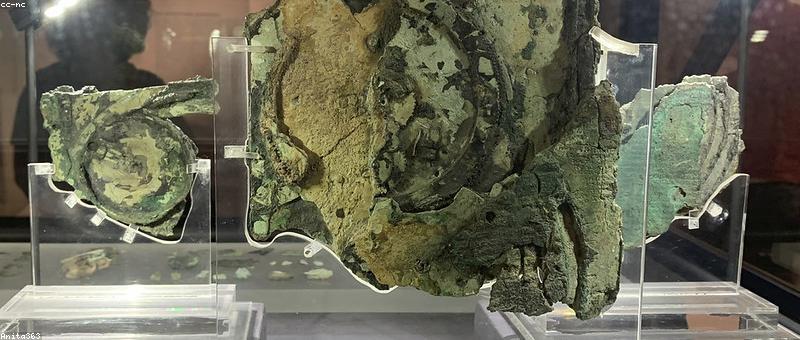
The Antikythera Mechanism was discovered in the remains of a shipwreck near the small Greek island of Antikythera in 1900. This remarkable device, now housed in the National Archaeological Museum of Athens, was created during the Hellenistic period - a time of great scientific and technological advancement in the ancient Mediterranean world.
Intricate X-ray and CT scans have revealed the incredible sophistication of the Antikythera Mechanism's internal gearing and mechanics. It is estimated to have contained over 30 distinct bronze gear wheels, some as small as the size of a fingernail, precisely assembled to track the movements of the sun, moon, and planets. This allowed the device to predict celestial events such as solar and lunar eclipses with remarkable accuracy.


Deciphering the Mechanism's Purpose
For over a century, scholars have debated the precise purpose and use of the Antikythera Mechanism. While its astronomical functions are well-established, the deeper implications of this device have been the subject of intense academic scrutiny and speculation.
Some researchers believe the Antikythera Mechanism was used as a type of "calculator" to predict the motions of celestial bodies and the timing of events such as the Olympic Games. Others suggest it may have been a teaching aid, used to demonstrate the complex mechanics of the heavens to students of astronomy and philosophy.
Intriguingly, the device also appears to have had inscriptions describing its workings and purpose - though much of this text remains illegible due to the mechanism's damaged state. As new technologies allow for increasingly advanced analysis of the surviving fragments, scholars continue to unravel the mysteries surrounding this technological marvel from the ancient world.
"The Antikythera Mechanism is a window into the past, revealing a level of mechanical sophistication that we would not have believed possible in the ancient Greek world." - Professor Michael Edmunds, Cardiff University


Computational Precursors and the Legacy of the Antikythera Mechanism
The Antikythera Mechanism's intricate gearing and ability to predict celestial events has led many to hail it as a true "computer" of the ancient world - a groundbreaking precursor to modern computational technology. This perspective has prompted comparisons between the Antikythera Mechanism and more recent inventions, such as the 19th-century Babbage Difference Engine, considered one of the first designs for a programmable computer.
While the Antikythera Mechanism predates these later innovations by over 1,500 years, it demonstrates that the conceptual foundations of computational technology may have much earlier origins than previously thought. The device's complex system of interlocking gears, dials, and pointers suggests a deep understanding of mathematics, astronomy, and mechanical engineering in the ancient Greco-Roman world.
Unanswered Questions and Ongoing Investigations
Despite the wealth of information that has been gleaned from the Antikythera Mechanism, many mysteries surrounding this device remain unsolved. The precise purpose and use of the mechanism, as well as the extent of its computational capabilities, continue to be the subject of intense scholarly debate.
Furthermore, the mechanism's provenance and the broader context of its creation are still not fully understood. Where was it manufactured? Who designed and built it? And what role, if any, did it play in the scientific and philosophical discourse of the ancient Mediterranean world?
As new technologies and analytical techniques are brought to bear on the surviving fragments of the Antikythera Mechanism, researchers remain hopeful that further insights will be gained. The ongoing investigation of this remarkable device promises to shed more light on the origins of computational technology and the remarkable ingenuity of the ancient Greeks.
Comments