Symbiosis
Why does symbiosis keep showing up in the most unexpected places? A deep investigation.
At a Glance
- Subject: Symbiosis
- Category: Biology, Ecology
Symbiosis is a ubiquitous phenomenon in nature, but it's far more than just a biological arrangement between two organisms. In fact, symbiosis is a fundamental principle underlying much of the natural world – and some would argue, the entire universe itself.
The Surprising Ubiquity of Symbiosis
From the earliest prokaryotic organisms to the complex ecosystems of today, symbiotic relationships are the rule rather than the exception. Consider the case of the mitochondria – the "powerhouses" of our cells. Mitochondria are believed to have originated as independent bacteria that formed a symbiotic relationship with early eukaryotic cells, eventually becoming an integral part of the cell's structure and function. This endosymbiotic theory, first proposed by Russian botanist Konstantin Mereschkowski in 1905, has become a cornerstone of evolutionary biology.
But symbiosis extends far beyond the cellular level. The human body is itself a complex, interdependent ecosystem, teeming with trillions of symbiotic microorganisms that outnumber our own cells by a factor of ten. These gut microbiomes play a crucial role in digestion, immune function, and even neurotransmitter production. Without this delicate microbial balance, human health would quite literally fall apart.
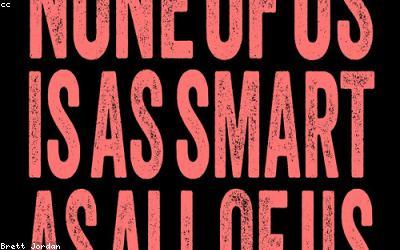

Symbiosis Beyond Biology
The reach of symbiosis extends far beyond the biological realm. Economists have long recognized the importance of symbiotic relationships in the business world, where successful companies often form strategic partnerships and mutually beneficial alliances. The rise of the platform economy, exemplified by tech giants like Amazon and Google, is predicated on the symbiotic relationship between platform owners, producers, and consumers.
Even in the realm of human society and culture, symbiosis plays a vital role. Religious and philosophical traditions often emphasize the interconnectedness of all things, with the individual seen not as a standalone entity, but as part of a larger whole. The concept of yin and yang in Taoism, for instance, encapsulates the idea that opposing forces are in fact complementary and interdependent.
"Nothing in the world is single; all things by a law divine in one spirit meet." - Alfred, Lord Tennyson

The Cosmic Implications of Symbiosis
Could the principle of symbiosis extend even to the cosmos itself? Some thinkers, such as the renowned scientist James Lovelock, have proposed the Gaia hypothesis, which posits that the Earth itself is a self-regulating, symbiotic system – a living, breathing organism that maintains the conditions necessary for life to thrive.
Similarly, the concept of holistic universe suggests that the entire universe functions as a vast, interconnected web of symbiotic relationships, where every part is inextricably linked to the whole. This view challenges the traditional mechanistic conception of the cosmos as a collection of discrete, independent entities, and instead sees it as a living, breathing tapestry of interdependence.
Symbiosis and the Future of Humanity
As we continue to grapple with the pressing challenges of our time – from climate change to social inequality – the principle of symbiosis may hold the key to unlocking a more sustainable and equitable future. By recognizing the interdependence of all living and non-living systems, we can begin to develop more collaborative and symbiotic approaches to problem-solving.
Perhaps the greatest lesson of symbiosis is that true progress and resilience can only be achieved through mutual understanding and cooperation. As we look to the future, it's time to embrace the symbiotic nature of our world, and to work together in service of the greater whole.
Comments