Social Media
The real story of social media is far weirder, older, and more consequential than the version most people know.
At a Glance
- Subject: Social Media
- Category: Technology, Internet, Communications


The Forgotten Origins of Social Media
While most people think of social media as a recent phenomenon driven by the rise of platforms like Facebook and Twitter, the true origins of social media go back much further than you might expect. In fact, the roots of modern social media can be traced back to the earliest days of networked computing and even to the very first bulletin board systems (BBS) in the 1970s.
One of the pivotal early steps in the development of social media was the creation of the first online communities in the 1980s, such as The WELL and CompuServe. These virtual gathering places allowed users to connect, share information, and engage in discussions, laying the groundwork for the more familiar social media platforms we know today.
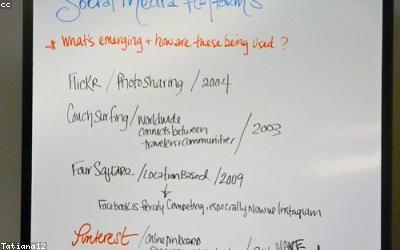


The Bulletin Board Revolution
In the late 1970s and early 1980s, the rise of personal computers and modems gave birth to the first bulletin board systems (BBS). These were rudimentary online discussion forums that allowed users to dial in, post messages, download files, and communicate with others. While they lacked the slick interfaces and broad reach of today's social platforms, BBS communities laid the foundation for the online social interactions we now take for granted.
One of the most influential early BBS systems was The WELL, founded in 1985. The WELL pioneered many social media concepts like user profiles, discussion forums, and the ability to follow other users. It attracted a vibrant community of tech enthusiasts, authors, and thought leaders who helped shape the culture of online interaction.
"The WELL was a truly astonishing social experiment, a virtual utopia where people from all walks of life came together to share ideas, debate issues, and forge deep connections." - Howard Rheingold, author of "The Virtual Community"


The Web 1.0 Era
As the World Wide Web emerged in the early 1990s, a new generation of online communities and social experiences began to take shape. Early web portals like AOL and GeoCities offered users the ability to create personal homepages, join interest-based chat rooms, and connect with like-minded individuals globally.
The 1990s also saw the rise of Usenet, a distributed discussion system that predated the web. Usenet allowed users to participate in topical discussion groups, or "newsgroups," on everything from politics to hobbies. While Usenet lacked the visual appeal of later social platforms, it demonstrated the intense human desire to connect, share, and debate online.
The Rise of Social Networking
The early 2000s ushered in a new wave of social media platforms that built upon the foundations laid by BBS, web portals, and Usenet. Sites like Friendster, MySpace, and eventually Facebook allowed users to create profiles, connect with friends, share content, and engage in online discussions.
These platforms represented a significant evolution in social media, introducing features like news feeds, viral sharing, and sophisticated algorithms to surface relevant content. They also played a key role in the widespread adoption of social media, making it accessible to a mainstream audience beyond the early tech enthusiasts.

The Social Media Explosion
The 2010s saw an explosion in the number and popularity of social media platforms, each with its own unique features and user base. Platforms like Twitter, Instagram, Snapchat, and TikTok have transformed the way people communicate, share content, and engage with each other online.
These newer platforms have built on the foundations laid by their predecessors, introducing innovative features like real-time updates, visual-first content, and algorithmic personalization. They have also played a significant role in shaping modern culture, influencing everything from politics and social movements to entertainment and consumer behavior.

The Future of Social Media
As technology continues to advance, the future of social media is poised to bring even more dramatic changes. Emerging trends like virtual reality, augmented reality, and decentralized social networks powered by blockchain technology suggest that the way we connect and interact online is still very much in flux.
Despite the many challenges and controversies surrounding social media, one thing is certain: the fundamental human desire to connect, share, and engage with others online is not going away anytime soon. The story of social media is still being written, and the next chapter promises to be just as fascinating and transformative as the ones that have come before.
Comments