Scale Invariance In Physics
A comprehensive deep-dive into the facts, history, and hidden connections behind scale invariance in physics — and why it matters more than you think.
At a Glance
- Subject: Scale Invariance In Physics
- Category: Theoretical Physics
- First Discovered: Early 20th Century
- Key Figures: Hendrik Lorentz, Kenneth Wilson, Alexander Polyakov
- Related Topics: Renormalization Group, Fractal Geometry, Critical Phenomena
The Surprising Simplicity of Infinite Scale
Imagine a universe where the rules don’t change no matter how much you zoom in or out. No matter if you're peering at the tiniest quantum particle or the vast expanse of cosmic structures, the fundamental laws look eerily similar. This is the essence of scale invariance — a principle that suggests nature’s laws are self-similar across different length scales. But here's the kicker: while it sounds like a philosophical curiosity, scale invariance underpins some of the most profound theories in modern physics, from quantum fields to the fabric of spacetime.
In the early 20th century, physicists like Hendrik Lorentz observed hints of scale invariance in electromagnetic phenomena. Yet, it wasn’t until the development of quantum field theory that the true power — and the elusive nature — of scale invariance was appreciated. How can the universe obey a rule that says "go big or go small, it’s all the same"? That question sparked a revolution, culminating in the discovery that scale invariance is a fingerprint of systems at critical points and the backbone of renormalization group theory.


The Hidden Order in Critical Phenomena
Picture water boiling. At 100°C, the liquid undergoes a phase transition into vapor. Right at this boiling point, the fluid’s properties become strangely self-similar — fluctuations occur at all sizes, from tiny bubbles to enormous whirlpools. This phenomenon, called criticality, is where scale invariance emerges in full force. Physicists like Kenneth Wilson in the 1970s unraveled this mystery, showing that at the critical point, the system exhibits no characteristic length scale. Instead, the patterns repeat endlessly, like fractals etched into the fabric of matter itself.
This discovery was more than a mathematical curiosity. It meant that the behavior of a magnet nearing its Curie point or a fluid approaching boiling could be described using the same principles, thanks to universality classes. Scale invariance is the secret sauce behind the predictability of phase transitions, revealing an order amid chaos.


Quantum Fields and the Echoes of Scale Symmetry
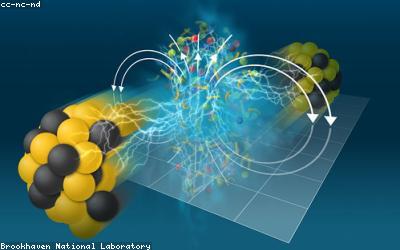
In the quantum realm, scale invariance takes on an even more intriguing role. Certain quantum field theories exhibit exact scale invariance at high energies, a property known as conformal invariance. This symmetry hints at a universe where particles and forces look the same regardless of the energy scale at which they are examined. Such theories are critical for understanding string theory and the elusive quantum nature of gravity.
Remarkably, the famous AdS/CFT correspondence proposes a duality between a gravity theory in a higher-dimensional space and a conformal field theory on its boundary — an idea that fundamentally relies on scale invariance. This correspondence is like a cosmic mirror, reflecting the universe's deepest secrets about spacetime and matter. It suggests that scale invariance isn’t just a symmetry — it's a bridge connecting quantum mechanics, gravity, and the fabric of the cosmos itself.



Why Break the Symmetry? When Scale Invariance Fails
While the universe loves to dance to the tune of scale invariance, it doesn’t always stay on beat. Nature often breaks this symmetry, creating the rich complexity we see around us. For example, in the Standard Model of particle physics, particles acquire mass through the Higgs mechanism, explicitly breaking scale invariance. Without this breaking, particles would remain massless, and our universe would look radically different — frozen in a state of perfect symmetry.
Similarly, at lower energies, electroweak symmetry-breaking introduces characteristic scales that define the universe’s structure. This breaking isn’t a flaw but a feature — adding layers of hierarchy and richness. It’s a reminder that symmetries in physics are often broken to allow complexity, diversity, and life itself.

The Frontier: Scale Invariance in Modern Cosmology
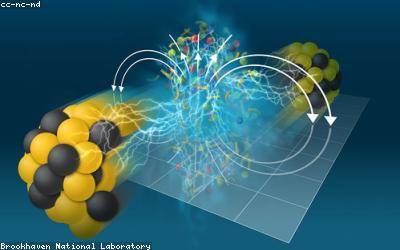
Today, cosmologists are hunting for signs of primordial scale invariance in the cosmic microwave background (CMB). Some models of the early universe, like inflationary theory, predict that quantum fluctuations stretched across vast scales were nearly scale-invariant. This imprint can be observed in the slight temperature variations in the CMB — like cosmic fingerprints that tell us about the universe’s earliest moments.
But wait, really? Recent data from the Planck satellite suggest subtle deviations from perfect scale invariance, hinting at new physics beyond our current theories. These anomalies could point to undiscovered fields or particles, potentially revolutionizing our understanding of the cosmos.
"If the universe isn’t perfectly scale-invariant, what does that tell us about the physics that governed its first fractions of a second?"
Exploring these questions might unlock secrets about dark energy and the ultimate fate of the universe. Scale invariance, it seems, is more than a mathematical curiosity — it's a key to the universe’s deepest mysteries.

The Unexpected Connections: Fractals, Nature, and Beyond
One of the most astonishing revelations is how pervasive scale invariance is outside of traditional physics. From the branching of trees to the rugged coastlines and cloud formations, fractal patterns abound — demonstrating that self-similarity is baked into the natural world. This universality suggests that the same principles governing subatomic particles might also shape galaxies and even ecological systems.
Some researchers argue that the universe itself is a fractal at the largest scales, hinting at a fundamental quantum-gravity fabric that connects everything. Could it be that the universe's structure is governed by a form of scale invariance extending beyond physics into the realm of biology and complexity? The answer might redefine what we understand as the "rules" of reality.

Engaging the Mind: How to See Scale Invariance Everywhere
If you start looking, the signs of scale invariance are everywhere. The veins in a leaf, the network of neurons in your brain, even stock market fluctuations — each can exhibit self-similarity. It’s like the universe whispers its secrets through patterns we often overlook.
Next time you gaze at a coastline or a mountain range, think of the fractals that mirror the structure of the universe at every scale. Dive into fractal geometry or explore the mathematics of chaos theory. These fields bridge the microscopic and the cosmic, revealing that scale invariance isn’t just a principle — it's a lens through which we see the universe’s hidden order.
Comments