Qubits Superposition And Entanglement
The complete guide to qubits superposition and entanglement, written for people who want to actually understand it, not just skim the surface.
At a Glance
- Subject: Qubits Superposition And Entanglement
- Category: Quantum Physics
- Est. Read Time: 12 minutes
- Key Figures: Niels Bohr, Erwin Schrödinger, John Bell
Quantum superposition and entanglement are the fundamental principles that underpin the remarkable properties of qubits - the core building blocks of quantum computing. By truly grasping these mind-bending concepts, we can unlock the full potential of this revolutionary technology and prepare for the quantum revolution.
The Bizarre Behavior of Qubits
Unlike the familiar bits of classical computing that can only exist in a 0 or 1 state, qubits possess the uncanny ability to exist in a "superposition" of both 0 and 1 simultaneously. This seemingly impossible state is the gateway to the mind-warping realm of quantum mechanics. Niels Bohr, the pioneering Danish physicist, described it as "complementarity" - the idea that at the quantum level, particles can exhibit contradictory properties at the same time.
But the weirdness doesn't stop there. Qubits can also become "entangled" - a phenomenon where the state of one qubit is inextricably linked to the state of another, no matter how far apart they are. Changing the state of one instantly affects the other, even if they are on opposite sides of the universe. Einstein famously called this "spooky action at a distance," unable to reconcile it with his understanding of reality.
The Groundbreaking Experiments That Proved Quantum Mechanics
For decades, the counterintuitive predictions of quantum theory were hotly debated, with many physicists refusing to accept their implications. But a series of ingenious experiments in the 20th century left no doubt about the strange behavior of the subatomic world.
In 1935, Schrödinger proposed his famous cat thought experiment to highlight the absurdity of quantum superposition. Then in 1964, physicist John Bell derived a mathematical inequality that differentiated classical and quantum mechanics. Experiments confirmed that quantum particles routinely violated Bell's inequality, proving the reality of entanglement.
"I think I can safely say that nobody understands quantum mechanics." - Richard Feynman
Despite the best efforts of scientific giants like Feynman, the true nature of quantum phenomena remains profoundly mysterious. But this hasn't stopped researchers from harnessing these bizarre properties for revolutionary technologies like quantum computing, cryptography, and sensing.
Quantum Computing and the Promise of the Qubit
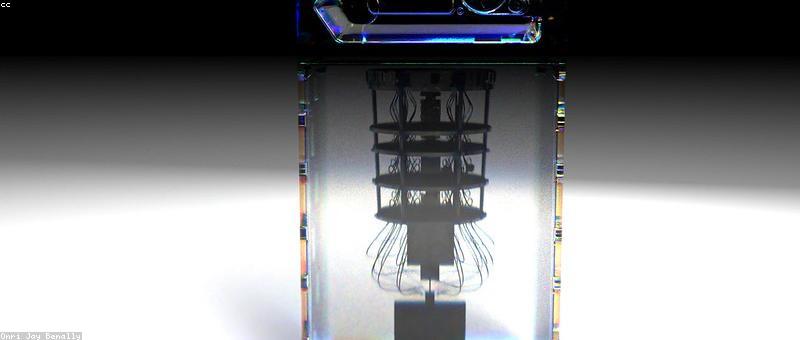
At the heart of quantum computing are qubits - quantum bits that can exist in superposition and become entangled. Unlike classical bits that are restricted to 0 or 1, qubits can explore a vast space of possible states simultaneously, opening up extraordinary new avenues for computation.
By leveraging quantum phenomena, quantum computers can theoretically outperform classical machines on certain types of problems by an astronomical margin. They could revolutionize fields like cryptography, materials science, drug discovery, and optimization - tasks that are intractable for today's computers.
Of course, building a large-scale, fault-tolerant quantum computer is an immense technical challenge. Qubits are incredibly fragile, easily disrupted by the slightest interaction with the outside world. Significant breakthroughs in fields like cryogenics, error correction, and qubit integration will be required before quantum computers can rival the capabilities of classical machines for general-purpose tasks.
The Quantum Encryption Revolution
One area where quantum technologies are already making an impact is cryptography. The strange properties of qubits can be leveraged to create unbreakable encryption keys. In quantum key distribution (QKD), the quantum state of a single photon is used to securely transmit a cryptographic key. Any attempt to intercept the key would disturb the quantum state, alerting the communicating parties.
This quantum-secured communication is already being deployed for high-security applications, with major initiatives underway in China, Europe, and the United States. As quantum computers advance, they will also pose a threat to many of the encryption schemes used today. Quantum-resistant cryptography is thus a critical priority for future-proofing our digital infrastructure.

The Quantum Sensing Revolution
Beyond computing and encryption, quantum phenomena are also enabling a revolution in sensing and metrology. Quantum sensors can detect the tiniest gravitational, magnetic, and electric fields with unprecedented precision. This has applications in fields like navigation, geological exploration, medical imaging, and fundamental physics research.
For example, quantum magnetometers are orders of magnitude more sensitive than conventional sensors, allowing them to map the human brain's neural activity with remarkable detail. Quantum gravity sensors can detect minute changes in the Earth's gravitational field, opening new frontiers in everything from oil and mineral prospecting to monitoring climate change.
Preparing for the Quantum Future
As quantum technologies mature and transition from the laboratory to the real world, they will transform entire industries and reshape our society. Mastering the strange and counterintuitive behavior of qubits is key to unlocking this quantum revolution.
While the full implications are still unfolding, one thing is clear: the future will belong to those who can harness the power of quantum mechanics. By understanding superposition, entanglement, and the other quantum phenomena at work, we can stay ahead of the curve and shape the world to come.
Comments