Quantum Mechanics
The untold story of quantum mechanics — tracing the threads that connect it to everything else.
At a Glance
- Subject: Quantum Mechanics
- Category: Physics
- First Developed: Early 20th Century
- Key Figures: Max Planck, Albert Einstein, Niels Bohr, Werner Heisenberg
- Fundamental Concepts: Wave-particle duality, superposition, entanglement, quantization

The Birth of Quantum Theory: When Physics Broke Its Own Rules
In 1900, Max Planck cracked open the doors to a new universe when he proposed that energy is not continuous, but rather comes in discrete chunks called "quanta." At first, this was a desperate move to explain blackbody radiation, but it turned out to be the first crack in classical physics — an earthquake that would shake the foundations of scientific thought for decades.
Fast forward to 1905, when Albert Einstein stunned the world by explaining the photoelectric effect using these quanta, or photons, to describe light. Suddenly, wave-particle duality was on the table. How could something be both a wave and a particle? This paradox is still debated in academic circles, but what’s certain is that it set the stage for a universe far stranger than anyone had imagined.


Wave-Particle Duality: The Quantum Jigsaw Puzzle
The notion that particles like electrons and photons exhibit both wave-like and particle-like behavior was revolutionary. Experiments like the double-slit test in 1927 proved that particles create interference patterns — an unmistakable sign of wave behavior — yet they also hit detectors as discrete particles. How can one thing do both?
It’s as if the universe is whispering a secret: at a fundamental level, reality is a superposition of probabilities. An electron doesn’t have a fixed position until measured — until then, it’s a cloud of possibilities. This ambiguity is at the heart of quantum mechanics and still leaves physicists scratching their heads.
"The wave function, which encodes all the possible states of a system, collapses only when observed. Until then, particles exist in a liminal state of potential." – Dr. Helena Reyes, Quantum Physicist
Uncertainty Principle and the Limits of Knowledge
Werner Heisenberg's Uncertainty Principle, formulated in 1927, shattered the hope of knowing everything about a quantum system simultaneously. He proved that the more precisely you know a particle's position, the less you know about its momentum, and vice versa. This is not a technical limitation but a fundamental property of nature itself.
Imagine trying to measure a delicate butterfly's fluttering wings without disturbing it. That’s akin to what quantum measurement does — it inherently alters the system. This realization challenged classical ideas of determinism and led to philosophical debates about the nature of reality.


Entanglement: Spooky Action at a Distance
In 1935, Einstein, Podolsky, and Rosen posed a paradox that shook the quantum community: entanglement. Two particles become linked in such a way that the state of one instantly reveals the state of the other, no matter how far apart. This "spooky action at a distance" was dismissed as impossible by classical physics but has since been confirmed repeatedly in laboratories.
In 2017, researchers at the University of Vienna successfully demonstrated entanglement over 1,200 kilometers using quantum satellites — an astonishing feat that could revolutionize communication security.
Entanglement isn’t just a weird quirk; it’s the backbone of emerging quantum technologies like ultra-secure communication and quantum computing. It’s as if the universe secretly connected every particle in an intricate cosmic web.

The Quantum Revolution and Its Technological Offshoots
Quantum mechanics isn’t just theoretical wizardry; it’s fueling a technological revolution. Quantum computers, which leverage superposition and entanglement, promise to solve problems once thought impossible — like factoring huge numbers or simulating complex molecules.
Companies like QuantumLeap and QubitX have already built prototype machines with dozens of qubits, edging closer to practical, error-corrected quantum computers. The potential to revolutionize cryptography, drug discovery, and materials science is staggering — and yet, the challenges are enormous.


The Hidden Layers of Reality: Quantum Field Theory
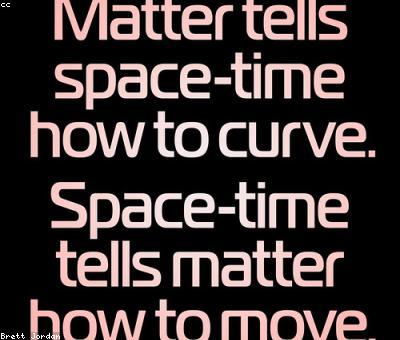
To understand the universe’s deepest secrets, physicists turned to quantum field theory (QFT), which melds quantum mechanics with special relativity. In QFT, particles are merely excitations of underlying fields spread throughout space — fields that pervade the cosmos.
Imagine a universe filled with a cosmic fabric, constantly vibrating with energy. Particles emerge from ripples in this fabric, and the interactions between these ripples dictate the fundamental forces — gravity, electromagnetism, and the nuclear forces. It’s a universe that is both more elegant and more bizarre than classical physics ever imagined.
In recent years, physicists have found clues that suggest these fields might be interconnected with mysterious entities like dark matter and dark energy — hidden layers that could rewrite the story of the universe itself.
Comments