Post Quantum Algorithms
The untold story of post quantum algorithms — tracing the threads that connect it to everything else.
At a Glance
- Subject: Post Quantum Algorithms
- Category: Cryptography, Mathematics, Computer Science

The Coming Quantum Revolution
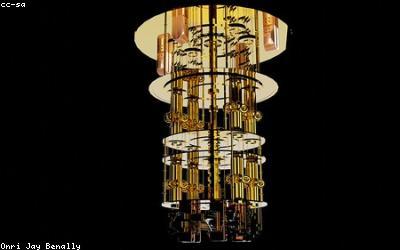
The world of cryptography is on the verge of a seismic shift. For decades, the security of our most critical communications and financial transactions has relied on the complexity of mathematical problems that even the fastest classical computers struggle to solve. But with the looming arrival of large-scale quantum computers, that foundation is about to be shaken to its core.
Enter post-quantum cryptography — a race to develop new algorithms and protocols that can withstand the awesome power of quantum computers. These post-quantum algorithms leverage different mathematical underpinnings, from lattices to error-correcting codes, that are believed to be resistant to quantum attacks.

The Origins of Post-Quantum Cryptography
The origins of post-quantum cryptography can be traced back to the groundbreaking work of mathematician Peter Shor. In 1994, Shor demonstrated an algorithm that could efficiently factor large numbers and compute discrete logarithms on a quantum computer — two fundamental problems that underpin the security of RSA and elliptic curve cryptography, the cornerstones of modern encryption.
"Shor's algorithm was a wake-up call for the cryptographic community. It showed that if large-scale quantum computers ever become a reality, they would render much of our current cryptographic infrastructure obsolete."
This sparked an urgent race to develop new algorithms and techniques that could resist the onslaught of quantum attacks. Over the past two decades, researchers have proposed a wide range of post-quantum candidates, each with its own unique strengths and trade-offs.
The Quantum-Resistant Contenders
The leading post-quantum cryptographic algorithms fall into several broad categories:
- Lattice-based Cryptography: Schemes that rely on the hardness of problems related to mathematical structures called lattices.
- Code-based Cryptography: Algorithms that draw their security from the difficulty of decoding certain error-correcting codes.
- Multivariate Cryptography: Constructions that exploit the complexity of solving systems of multivariate quadratic equations.
- Hash-based Cryptography: Schemes that use cryptographic hash functions as their foundation.
- Isogeny-based Cryptography: Algorithms that leverage the properties of elliptic curve isogenies.
Each of these approaches offers a unique set of tradeoffs in terms of performance, key size, and quantum resistance. The search for the "holy grail" of post-quantum cryptography — an algorithm that is both highly secure and efficient — continues to be a major focus of research and standardization efforts.


The Race to Standardization
With the looming threat of quantum computers on the horizon, governments and standards bodies around the world have launched initiatives to identify and standardize post-quantum cryptographic algorithms. In the United States, the National Institute of Standards and Technology (NIST) initiated a multi-year process in 2016 to evaluate and select a suite of post-quantum algorithms for widespread adoption.
Similar efforts are underway in Europe, China, and other regions, all racing to future-proof their critical infrastructure against the looming quantum threat. The stakes are high, as the security of everything from sensitive government communications to the global financial system hangs in the balance.

The Quantum-Proof Future
As the world prepares for the arrival of large-scale quantum computers, the development of post-quantum cryptographic algorithms has become a matter of global strategic importance. The transition to these new quantum-resistant standards will be a complex and challenging process, requiring careful planning and coordination across industries and nations.
Yet, the potential payoff is immense. By future-proofing our digital infrastructure, post-quantum cryptography will help ensure the continued security and integrity of our most sensitive data and communications — laying the foundation for a quantum-proof future.
Comments