Mathematics Of The Universe
Why does mathematics of the universe keep showing up in the most unexpected places? A deep investigation.
At a Glance
- Subject: Mathematics Of The Universe
- Category: Theoretical Physics, Cosmology
- Key Figures: Max Tegmark, Albert Einstein, Galileo Galilei
- First Noticed: Early 20th Century with Einstein’s General Relativity
- Core Idea: Mathematical structures underpin physical reality



The Hidden Code: Why Math Seems to Govern Reality
Have you ever looked at a snowflake under a microscope and wondered — how does such perfect geometry arise from chaos? Or considered that the universe’s very fabric is woven from equations so elegant they seem almost alive? The startling truth is, many physicists now believe that mathematics isn’t just a language we use to describe the universe — it is the universe itself. This idea, radical as it sounds, has roots stretching back centuries but has exploded into prominence in recent decades.
In 1960, physicist Eugene Wigner published a mind-bending essay titled "The Unreasonable Effectiveness of Mathematics in the Natural Sciences," where he lamented that it’s a mystery how math so abstract can so accurately describe the world. Today, that mystery fuels the Mathematics of the Universe — an investigation into whether the universe is inherently mathematical, or if our brains just find patterns that aren't really there.

The Mathematical Universe Hypothesis: A Bold Claim
Max Tegmark, a physicist at MIT, took this debate a giant leap forward with his Mathematical Universe Hypothesis. His audacious claim? Our entire universe is not just described by mathematics — it *is* a mathematical structure. Think of it like this: every particle, every galaxy, every moment in time is a pattern within a vast, intricate code.
In Tegmark’s view, the universe exists as a subset of an infinite hierarchy of mathematical realities, with our universe being just one among countless others. He points out that the equations governing quantum mechanics, relativity, and cosmology all share a common thread — they are mathematical expressions that seem to emerge from the very fabric of existence.

The Pythagorean Roots of Cosmic Harmony
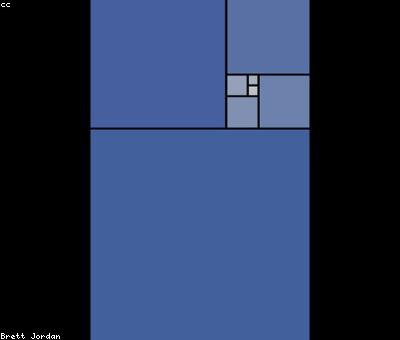
Long before modern physics, Pythagoras and his followers believed that numbers and ratios dictated the harmony of the cosmos. The Pythagoreans saw musical intervals and planetary motions as expressions of simple ratios — a notion that still resonates today. Johannes Kepler, the astronomer who deciphered the elliptical orbits of planets, famously argued that the universe’s secrets could be unlocked through mathematical relationships.
Fast-forward to the 20th century, where Einstein’s field equations connect space, time, and gravity through a beautiful geometric language. Einstein himself was captivated by the idea that the universe's structure could be described by a set of equations — an idea that echoes the ancient Pythagorean dream of a universe governed by harmony and order.
"Mathematics is the language in which the universe is written." — Galileo Galilei

Fractal Geometry and the Universe’s Self-Similarity
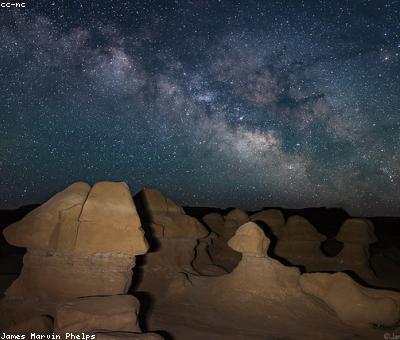
Step into the realm of fractals — endlessly repeating patterns found in snowflakes, coastlines, and even the distribution of galaxies. Researchers like Benoît B. Mandelbrot revealed that the universe displays self-similarity across scales. The clustering of galaxies resembles the branching of trees or the pattern of blood vessels in our bodies.
In a surprising twist, recent astrophysical data suggest that the universe’s large-scale structure might be a cosmic fractal. If true, this would mean the universe's fabric isn’t random chaos but a fractal code, repeating and scaling in ways that challenge our traditional understanding of space.
Quantum Mechanics and Mathematical Probabilities
Quantum physics, with its wave functions and probabilities, seems less deterministic and more like a dance of abstract math. The Schrödinger equation, for instance, describes how particles behave in a probabilistic landscape, hinting that reality itself might be a giant quantum computation.
Some theorists propose that at its core, the universe is a quantum computer running complex algorithms. This idea is supported by digital physics, which posits that the universe’s deepest laws are encoded in information — a form of math that underpins everything from black holes to the tiniest quark.
"The universe is not only queerer than we suppose, but queerer than we can suppose." — J.B.S. Haldane



The Mystery of Mathematical Elegance: Why Do the Equations Fit So Well?
One of the strangest facets of the universe is how beautifully its laws fit together. From Einstein’s relativity to the Standard Model of particle physics, the equations are elegant, surprisingly simple, and universally applicable. But why?
Some physicists argue that this elegance isn’t coincidental. They believe that only a universe describable by such neat mathematics can support complexity, life, and consciousness. In this view, the universe’s mathematical structure is a prerequisite for the emergence of intelligent observers — us.
Wait, really? Some speculate that if the universe weren’t mathematically coherent, conscious beings would never arise to question its structure. The universe’s mathematical fabric isn’t just a map — it’s a prerequisite for existence itself.
Comments