Lattice Based Cryptography Explained
lattice based cryptography explained is one of those subjects that seems simple on the surface but opens up into an endless labyrinth once you start digging.
At a Glance
- Subject: Lattice Based Cryptography Explained
- Category: Cryptography & Cybersecurity
- Difficulty: Advanced
- Related Topics: Post-Quantum Cryptography, Lattice Algorithms, Quantum Computing Threats
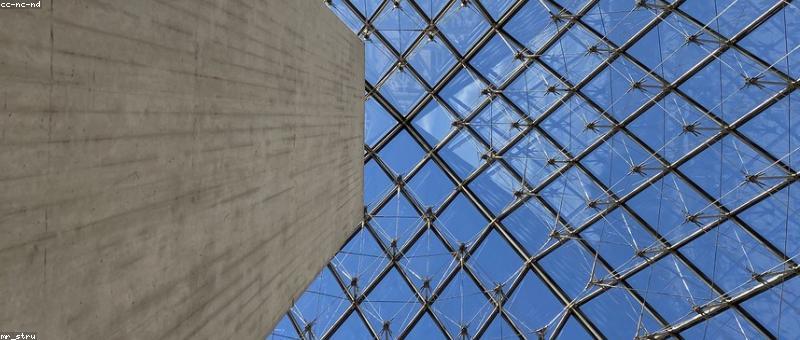
The Hidden Power of Geometric Structures
At first glance, lattices might seem like abstract geometric arrangements — like a 3D grid of points stretching into infinity. But in cryptography, they are the backbone of one of the most promising defenses against the looming threat of quantum computers. Imagine a complex maze with countless pathways — finding the shortest path is easy for a seasoned maze solver, but exponentially harder for a naive explorer. That’s the essence of lattice problems: easy to verify, nearly impossible to solve efficiently without the secret key.
What makes lattices so intriguing is their dual nature. They are both a geometric object and an algebraic construct, blending number theory with spatial intuition. This synergy creates problems so hard that, even with the most powerful classical computers, cracking them remains a monumental challenge. But wait, really? How can geometry be the secret weapon against quantum threats?
The Core Hard Problems That Make Lattice Cryptography Unbreakable
Deep within the fabric of lattice cryptography lie problems like the Shortest Vector Problem (SVP) and the Learning With Errors (LWE) problem. These aren’t just mathematical curiosities — they’re the fortress walls protecting our digital secrets.
- SVP: Given a lattice, find the shortest non-zero vector. Think of it as locating the thinnest needle in a sprawling haystack of vectors.
- LWE: Based on noisy linear equations, LWE underpins many encryption schemes because it remains hard to solve, even with quantum algorithms. The problem involves solving systems with a small amount of "error" added — a twist that makes traditional attacks futile.
While classical algorithms like Lenstra–Lenstra–Lovász (LLL) can find approximate solutions, they stumble when precision demands increase. Quantum algorithms? They don’t do much better — yet.



From Abstract Math to Practical Encryption
Translating these problems into real-world encryption involves clever encoding schemes. One groundbreaking approach is the Ring-LWE encryption, which leverages polynomial rings to pack more data into fewer computations. This innovation makes lattice-based schemes not just secure but also efficient enough for practical use, like securing internet traffic or protecting data in the cloud.
For example, the NIST post-quantum cryptography competition has seen several lattice-based algorithms reach finalist status, including CRYSTALS-Kyber and Dilithium. These algorithms promise to replace current standards — like RSA and ECC — before quantum computers become a tangible threat.
"Lattice cryptography isn’t just a theoretical curiosity; it’s the fortress standing between us and a future where traditional encryption fails,"
The Quantum Threat and the Race for Quantum-Resistant Security
Quantum computers, once a mere laboratory dream, are rapidly approaching reality. Their ability to factor large numbers (breaking RSA) or solve discrete logarithms (breaking ECC) threatens to unravel our current cryptographic infrastructure.
But lattice-based cryptography is designed to resist these quantum assaults. Its problems are believed to be hard even for a quantum adversary — making it a cornerstone of the post-quantum cryptography movement.
In 2022, Google announced plans to implement lattice-based algorithms in experimental Chrome extensions, signaling a pivotal shift towards quantum-safe protocols. The stakes are high — once quantum computers surpass a certain size, current encryption schemes could become obsolete overnight.

The Future of Lattice-Based Cryptography: Challenges and Opportunities
Despite its promise, lattice cryptography faces hurdles. Implementations must balance security and efficiency; some schemes are computationally intensive and require large keys. Researchers are racing to optimize algorithms, reduce key sizes, and develop standardized protocols.
Meanwhile, new lattice problems continue to be discovered, sometimes threatening to weaken assumptions or open unforeseen vulnerabilities. The community is engaged in a continuous game of cat and mouse — like a high-stakes chess match played across quantum and classical realms.
One exciting avenue is lattice-based zero-knowledge proofs, which could enable privacy-preserving transactions and identity verification in the post-quantum era. These innovations promise a future where security is not sacrificed at the altar of efficiency.
Comments