Koch Snowflake
The untold story of koch snowflake — tracing the threads that connect it to everything else.
At a Glance
- Subject: Koch Snowflake
- Category: Fractal Geometry
- First Described: 1904 by Helge von Koch
- Mathematician: Helge von Koch
- Mathematical Type: Self-similar fractal
- Dimension: Approximately 1.2619
The Origins of a Mathematical Marvel
In 1904, Helge von Koch, a Swedish mathematician with a penchant for geometric wonders, unveiled what would become one of the most iconic images in fractal mathematics: the Koch snowflake. But what makes this shape more than just a pretty picture? It’s a gateway to understanding the wild, chaotic beauty of the universe’s hidden patterns. Koch’s snowflake isn't just a fractal; it's a mirror reflecting the recursive complexity found in coastlines, mountain ranges, and even the vascular systems inside our bodies. Wait, really? Yes. The same patterns that define jagged coastlines are, in a sense, incarnations of the Koch snowflake's infinite complexity.

Constructing the Infinite: From Triangle to Fractal
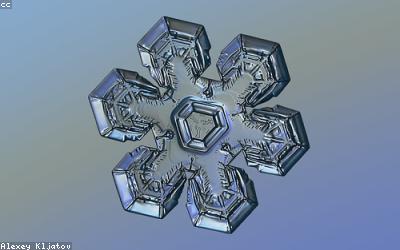
The construction of the Koch snowflake begins with an equilateral triangle. In a series of iterative steps, each side is divided into three equal segments. The middle segment is then replaced with two segments that form an outward-pointing equilateral bump, creating a "spike." This process is repeated ad infinitum, with each iteration adding more intricacy. After just a few rounds, the shape's perimeter becomes infinite, yet its area remains finite — an astonishing paradox that challenges our everyday intuition about space and boundaries.
Imagine zooming into the edge of a coastline, discovering more jaggedness at every scale. The Koch snowflake encapsulates this endless detail perfectly. In fact, the shape’s perimeter grows without bound, approaching infinity as the iterations tend toward infinity, but its area converges to a finite limit. This duality — boundless perimeter, finite area — is a phenomenon that defies the simple geometric rules we’re used to.

The Mathematical Significance and Beyond
The Koch snowflake isn’t just an academic curiosity; it represents a pivotal point in the development of fractal geometry. Mathematician Benoît B. Mandelbrot, who popularized fractals in the 20th century, studied shapes like the Koch snowflake to understand the geometry of natural phenomena. Unlike simple Euclidean shapes, fractals exhibit self-similarity — each zoomed-in segment resembles the whole. This property is fundamental to modeling natural systems with complex, recursive structures.
Interestingly, the Koch snowflake’s fractal dimension, approximately 1.2619, lies between a line (dimension 1) and a plane (dimension 2). This fractional dimension isn’t just a mathematical oddity; it quantifies how the shape fills space. Think of it as the “roughness” index of a coastline or mountain range. Nature, in all its chaotic glory, adheres more closely to fractal mathematics than we ever imagined.

Implications in Science and Technology
Beyond pure mathematics, the principles behind the Koch snowflake influence fields like computer graphics, antenna design, and even urban planning. Engineers harness fractal patterns to create more efficient wireless antennas — those that can transmit and receive signals across multiple frequencies simultaneously. The jagged, recursive edges of the Koch snowflake inspire designs that maximize surface area in limited spaces, making devices smaller and more powerful.
Moreover, understanding fractal boundaries aids in modeling natural phenomena. Coastal erosion, cloud formations, and the distribution of galaxy clusters all reveal fractal-like patterns. The Koch snowflake acts as a simple yet profound model for these complex systems, reminding us that order and chaos often dance hand-in-hand.



The Surprising Cultural Impact
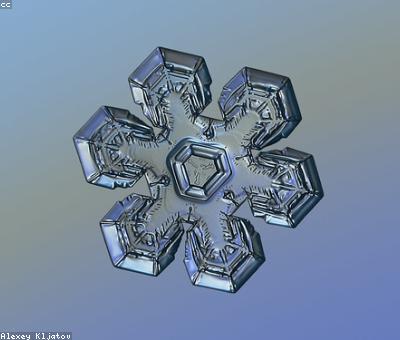
While rooted in mathematical rigor, the Koch snowflake has permeated popular culture. It appears in architectural designs, jewelry, and even in the logos of tech companies seeking to symbolize complexity and innovation. Its mesmerizing form captures the human fascination with infinite detail — a visual metaphor for the boundless curiosity that drives science and art alike.
In the art world, fractals inspired by the Koch snowflake have been showcased in exhibitions exploring chaos theory. Digital artists generate stunning landscapes and abstract compositions that mimic the snowflake's intricate symmetry. It’s a testament to how a simple geometric process can transcend academia, becoming a symbol of the universe’s infinite complexity.
Inside the Mind of Helge von Koch
Helge von Koch’s groundbreaking insight was born from a desire to understand nature’s irregularity. Frustrated by the limitations of classical geometry, he envisioned shapes that could model the coastlines and mountain ranges he observed in Scandinavia. His 1904 paper, titled “On the Construction of a Geometrical Figure,” challenged the very notion of smooth curves, paving the way for fractal geometry.
Legend has it that von Koch’s inspiration came during a walk along the rocky shores of the Gulf of Bothnia. Witnessing the jagged coastlines firsthand, he wondered: could this pattern be formalized mathematically? The answer was a resounding yes — and the Koch snowflake was born. His work laid the foundation for a new way of understanding complexity, forever changing the landscape of mathematics.
"The beauty of the Koch snowflake lies in its simplicity and infinite complexity — like the universe itself,"- Helge von Koch, 1904
Comments