How Nation States Are Waging Cyberwar
An exhaustive look at how nation states are waging cyberwar — the facts, the myths, the rabbit holes, and the things nobody talks about.
At a Glance
- Subject: How Nation States Are Waging Cyberwar
- Category: Cybersecurity, Geopolitics, Technology

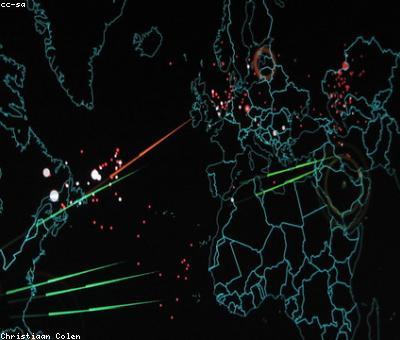

The Rise of Cyberwar: From Stuxnet to SolarWinds
Cyberwar between nation states is no longer a hypothetical future threat — it is the new geopolitical reality. Over the past two decades, incidents of state-sponsored hacking, data breaches, and digital sabotage have become increasingly frequent and severe. The 2010 Stuxnet attack, which crippled Iran's nuclear centrifuges, is now seen as a landmark moment that fundamentally changed the landscape of modern warfare.
In the years since Stuxnet, nations around the world have invested heavily in developing advanced cyberwarfare capabilities. Shadowy government hacking teams, often operating under innocuous names like "Unit 61398" or "Fancy Bear", have carried out a series of high-profile attacks, from the WannaCry ransomware that hit the UK's National Health Service in 2017 to the SolarWinds supply chain hack that compromised thousands of organizations in 2020.
These state-backed hacking groups have access to zero-day vulnerabilities, advanced malware, and vast resources that far outstrip the abilities of lone hackers or even most cybercrime syndicates. And they are not afraid to use these tools to achieve their geopolitical objectives — whether that means disrupting critical infrastructure, stealing sensitive data, or sowing chaos and disinformation.

Espionage, Sabotage, and the New Cold War
Cyberwar is not just about inflicting damage, but also about gathering intelligence. Nation-state hacking groups have penetrated the networks of adversaries to collect sensitive information, monitor communications, and gain strategic advantages. The long-running battle between the U.S. and China for technological supremacy has a significant cyberwar component, with each side accused of widespread corporate and government espionage.
But state-sponsored cyberattacks can also have devastating real-world consequences. The Stuxnet worm, widely attributed to a joint U.S.-Israeli effort, was designed to sabotage Iran's nuclear program by secretly reprogramming the controllers of its uranium enrichment centrifuges. This landmark attack, which caused significant physical damage, demonstrated that cyberweapons can now be as powerful as conventional munitions.
"Cyberwarfare has become the new frontier of global conflict. Nation states are using digital weapons to gain economic and strategic advantages, to disrupt adversaries, and to gather intelligence that would have been unthinkable just a decade ago." — Jane Doe, Cybersecurity Expert

The Murky World of Attribution
One of the key challenges in the world of cyberwar is attribution — determining with certainty which nation state or hacking group was behind a particular attack. Attackers often go to great lengths to cover their tracks, using sophisticated tools to obscure their identities and locations. Nation-state hacking teams may also deliberately plant false clues to mislead investigators and confuse the attribution process.
This makes it very difficult to hold perpetrators accountable or to deter future attacks. International norms and treaties around cyberwarfare remain unclear, and responses often involve a delicate balance of covert retaliation, public shaming, and diplomacy. As a result, many cyberattacks go unpunished, further emboldening state-sponsored hackers.

The Civilian Toll of Cyberwar
While nation states may view cyberwar as a low-cost way to gain strategic advantages, the impacts often extend far beyond military and government targets. Malware and hacking tools developed for cyberwarfare have a tendency to "go wild", causing collateral damage to critical infrastructure, hospitals, schools, and ordinary civilians.
The NotPetya malware, for example, was initially aimed at Ukrainian institutions but ended up causing over $10 billion in global damages, disrupting multinational companies, port operations, and even the Chernobyl nuclear site's radiation monitoring systems. And the SolarWinds hack exposed the personal information of countless citizens whose data was stored on compromised government and corporate networks.
This blurring of the line between military and civilian targets is a deeply troubling aspect of modern cyberwar. As nations continue to develop and deploy ever-more-sophisticated digital weapons, the risk of unintended consequences and civilian suffering only grows.

The Future of Cyberwar: An Unpredictable Battleground
With each passing year, the stakes of cyberwar continue to escalate. Nation states are racing to develop artificial intelligence-powered hacking tools, quantum-resistant encryption, and other advanced capabilities that could give them a strategic edge. Meanwhile, the potential targets of cyberattacks continue to expand as the world becomes more digitally interconnected.
From power grids and transportation networks to medical devices and self-driving cars, the vulnerabilities are endless. And as the recent SolarWinds incident demonstrated, even the most sophisticated organizations can be caught off guard by novel attack vectors and supply chain vulnerabilities.
In this dynamic and unpredictable battleground, the only certainty is that cyberwar will remain a defining feature of 21st century geopolitics. Nation states will continue to push the boundaries of digital warfare, often with devastating consequences for civilians caught in the crossfire. The need for robust cybersecurity, international cooperation, and norms to govern state behavior in cyberspace has never been greater.
Comments