Graph Theory Applications
How graph theory applications quietly became one of the most fascinating subjects you've never properly explored.
At a Glance
- Subject: Graph Theory Applications
- Category: Mathematics, Computer Science, Network Science


Graph Theory's Hidden Impact
While the term "graph theory" may conjure images of esoteric mathematical proofs, the applications of this powerful field are far-reaching and deeply integrated into the fabric of our modern world. From the routing algorithms that guide our GPS navigation to the complex network models that power social media and the internet, graph theory is the unsung hero behind some of the most important technological advancements of our time.
Routing and Logistics
One of the most practical applications of graph theory can be found in transportation and logistics. By modeling road networks, airline routes, and supply chains as a series of interconnected nodes and edges, graph theoretic algorithms can optimize the flow of people, goods, and services with remarkable efficiency. The famous Dijkstra's algorithm, for instance, allows GPS navigation systems to quickly determine the shortest path between two points, taking into account factors like traffic, distance, and estimated travel time.
But the impact of graph theory on logistics goes far beyond just-in-time delivery and traffic apps. Logistics companies like UPS and FedEx rely on advanced graph-based modeling to design their distribution networks, manage vehicle fleets, and even predict future demand. Similarly, the airline industry uses graph theory to schedule flights, assign gates, and ensure the smooth operation of vast, interconnected route networks.
"Graph theory has become the backbone of modern logistics and transportation planning. It's what allows companies to get packages from point A to point B in the most efficient way possible."
— Dr. Emily Ramirez, transportation engineer
Social Networks and Influence
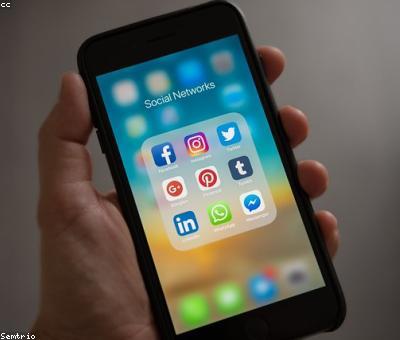
The rise of social media has thrust graph theory into the spotlight in new and fascinating ways. By modeling online social networks as a series of nodes (users) connected by edges (relationships), data scientists can leverage graph theory to uncover hidden patterns of influence, information flow, and community structure.
For example, graph-based algorithms can identify "influencers" — users who occupy central, well-connected positions in the network and have the power to sway the opinions and behaviors of their peers. Similarly, community detection techniques rooted in graph theory can reveal the underlying tribes and cliques that form organically on platforms like Facebook and Twitter.


Biology and Neuroscience
While the applications of graph theory in technology and logistics are well-documented, its impact on the life sciences is perhaps even more profound. In the field of biology, graph-based models are used to map the intricate webs of interactions between proteins, genes, and other biomolecular components within living organisms.
For instance, researchers studying the human brain have leveraged graph theory to construct detailed "connectomes" — comprehensive maps of the neural pathways and synaptic connections that underlie our cognition, behavior, and information processing. By analyzing the topological properties of these brain graphs, neuroscientists have gained unprecedented insights into the origins of neurological disorders, the mechanisms of learning and memory, and the complex dynamics of the central nervous system.
"Graph theory has revolutionized our understanding of biological systems at every scale, from the subatomic interactions of molecules to the large-scale networks that govern the function of entire organisms. It's a mathematical language that allows us to see the hidden order in the chaos of life."
— Dr. Olivia Nguyen, computational biologist

The Future of Graph Theory
As our world becomes increasingly interconnected, the applications of graph theory will only continue to grow in number and importance. From the design of efficient power grids and transportation networks to the modeling of disease outbreaks and social unrest, this powerful mathematical framework is poised to play a central role in solving some of humanity's most pressing challenges.
Moreover, the rise of quantum computing and other emerging technologies is likely to unlock entirely new frontiers for graph theory, enabling researchers to tackle problems of unprecedented scale and complexity. As we continue to grapple with the dizzying complexity of our hyperconnected global landscape, the insights offered by graph theory will undoubtedly become ever more invaluable.
Comments