Fractals And The Geometry Of Nature
Why does fractals and the geometry of nature keep showing up in the most unexpected places? A deep investigation.
At a Glance
- Subject: Fractals And The Geometry Of Nature
- Category: Mathematics, Science, Nature
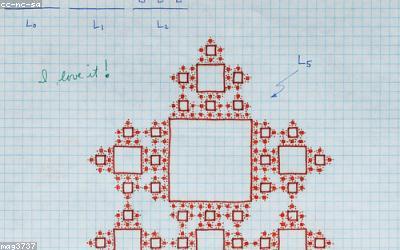
Fractals, those intricate mathematical patterns that echo across scales from the microscopic to the cosmic, have been captivating the human imagination for decades. What started as an obscure corner of mathematics has blossomed into a revolutionary way of understanding the geometry that underlies the natural world around us. From the branching patterns of trees and rivers to the filigree of snowflakes and the pulsing fractals of the human circulatory system, these self-similar structures are ubiquitous in the fabric of our universe.
The Visionary Who Discovered Fractals
The man who brought fractals to the forefront of scientific consciousness was the Polish-American mathematician Benoit Mandelbrot. In 1975, Mandelbrot published his groundbreaking work The Fractal Geometry of Nature, which argued that the seemingly chaotic and irregular forms found in nature could be described with amazing precision using the principles of fractal geometry. Mandelbrot's crucial insight was that beneath the apparent randomness of natural phenomena lay an underlying order, a hidden mathematics that gave rise to the breathtaking complexity we observe all around us.
Revealing the Hidden Order of Nature
Mandelbrot's work on fractals upended the traditional view of nature as a collection of irregular, unrelated forms. By describing natural phenomena through the lens of fractal geometry, he revealed an underlying order and predictability that had previously gone unnoticed. Coastlines, for example, had long been considered the epitome of irregular, chaotic forms. But Mandelbrot showed that their apparent randomness could be precisely quantified using fractal dimensions, allowing scientists to model and predict the evolution of coastlines with remarkable accuracy.
"Clouds are not spheres, mountains are not cones, coastlines are not circles, and bark is not smooth, nor does lightning travel in a straight line." - Benoit Mandelbrot
Fractals in the Human Body
Fractals aren't just found in the natural world - they also play a crucial role within the human body. The branching patterns of the circulatory system, respiratory system, and nervous system all exhibit fractal-like structures, allowing for maximum efficiency and coverage within a limited space. This fractal-based architecture is believed to have evolved over millions of years to optimize the transport of vital resources like oxygen and nutrients throughout the body.

Fractals in Art and Design
The captivating beauty of fractals has also made them a staple of modern art and design. Artists have long been drawn to the intricate, self-repeating patterns of fractals, using them to create visually stunning works that blur the line between math and aesthetics. From the psychedelic fractal landscapes of digital art to the organic fractals found in traditional Japanese designs, these mathematical marvels have become a ubiquitous part of our visual culture.
The Future of Fractal Geometry
As our understanding of fractals continues to deepen, scientists are discovering new and exciting applications for this revolutionary branch of mathematics. Fractals are being used to model everything from the spread of wildfires to the growth of cancer tumors, offering powerful new tools for predicting and managing complex natural phenomena. And with the increasing computational power of modern computers, the possibilities for exploring the boundless world of fractal geometry only continue to expand. Who knows what other hidden orders of the universe are just waiting to be unlocked by the fractal lens?
Comments