Fractal Math
How fractal math quietly became one of the most fascinating subjects you've never properly explored.
At a Glance
- Subject: Fractal Math
- Category: Mathematics / Chaos Theory
- Key Figures: Benoît B. Mandelbrot, Jackson Pollock, Richard Voss
- Founded: 1975 (Mandelbrot's groundbreaking work)
- Applications: Computer graphics, nature modeling, signal processing, financial markets
The Hidden Geometry of Nature: Beyond the Straight Line
When most of us think of geometry, we imagine perfect squares, circles, or triangles — precise shapes with clear-cut edges. But nature rarely plays by those rules. The world around us is a chaos of jagged coastlines, turbulent clouds, and sprawling mountain ranges, all hinting at a deeper, more intricate order: fractals.
In 1975, Benoît Mandelbrot shattered the tidy world of Euclidean geometry with his discovery of fractals — complex patterns that repeat endlessly at different scales. These patterns are *self-similar*, meaning zooming into a small part reveals a miniature version of the whole. It’s like looking at a fern leaf and then zooming in to see tiny leaflets mirroring the larger structure.
Wait, really? This concept isn’t just theoretical. It turns out that coastlines, mountain ridges, and even blood vessels follow fractal patterns. Mandelbrot’s infamous "Coastline Paradox" demonstrated that measuring a coastline’s length depends heavily on the scale of measurement. The smaller the ruler, the longer the measured coast — it’s a mind-bending idea that reveals how fractals underlie our entire visual universe.
The Mathematics Behind the Madness
At the heart of fractal math lies the iteration process. You start with a simple equation — like the famous quadratic polynomial \(z_{n+1} = z_n^2 + c\) — and repeatedly apply it. Depending on the initial values, this process either spirals out to infinity or settles into a pattern.
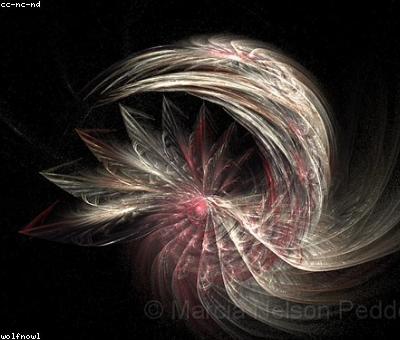
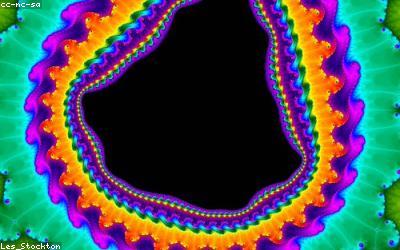
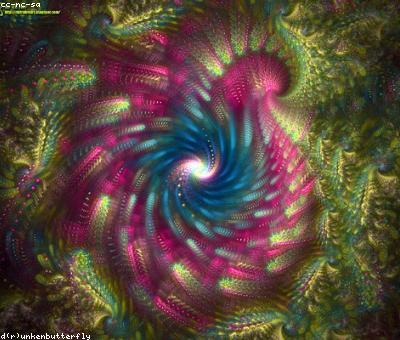
The boundary between these two outcomes is where fractals truly come alive. The most iconic example is the Mandelbrot set. Its stunning, swirling patterns are the visual embodiment of complex numbers and iterative functions. It’s not just a pretty picture — it's a roadmap of chaos and order intertwined.
And here’s a little-known fact: mathematicians have shown that the Mandelbrot set’s boundary has a *fractal dimension* of about 2. This means it’s infinitely intricate — more complex than a mere line but not quite filling a plane. It’s as if the boundary itself is a living, breathing creature made of infinite detail.
"The Mandelbrot set reveals that simplicity can spawn complexity beyond our wildest dreams, echoing the unpredictable yet patterned fabric of reality."
Fractals in Art and Culture: More Than Just Math
It’s easy to dismiss fractals as just a mathematical curiosity. But their influence ripples into art, music, and popular culture in profound ways. Jackson Pollock, the legendary abstract expressionist, unintentionally painted fractal-like canvases, with his drip techniques producing self-similar patterns that fascinate scientists today.
Take the mesmerizing fractal patterns found in spiral shells or Romanesco broccoli. These natural forms follow fractal geometry, revealing a design principle that’s been encoded into life itself.
Furthermore, fractal algorithms are revolutionizing computer-generated imagery. Movies like Doctor Strange and video games harness fractal mathematics to craft otherworldly landscapes that evolve infinitely without repeating, giving digital worlds an organic, believable feel.
Decoding Chaos: Fractal Math and the Financial World
The real surprise? Fractal math isn’t confined to beautiful images or nature. It’s at work in the unpredictable realm of finance. Traders and economists have applied fractal analysis to understand stock market fluctuations, which often seem random but follow hidden fractal patterns.
In 1987, Richard Voss demonstrated that market data, from daily prices to high-frequency trades, exhibit fractal properties with a strange scale invariance. This insight challenged traditional models that relied on normal distributions and Gaussian randomness.
By studying the fractal dimensions of market data, analysts can better anticipate periods of turbulence or calm, giving rise to chaos-based trading strategies. It’s a daring dance with the unpredictable, rooted in the same math that describes coastlines and clouds.
Why Fractal Math Matters More Than Ever
In a world obsessed with order and certainty, fractal math whispers a different story: that chaos and complexity are fundamental to reality. From the tiny structures inside our bodies to the vast coastlines that define continents, fractals challenge our notions of what is simple or complicated.
Scientists continue to discover new fractal phenomena, from the patterns of lightning bolts to the structure of galaxies. It’s as if the universe itself is built on fractal scaffolding — an infinite tapestry of self-similar chaos that invites us to look closer and think deeper.
So next time you see a fern, a mountain, or a financial chart, remember: beneath that seemingly random complexity lies a hidden order, coded in the elegant language of fractal math. And just like Mandelbrot, you might find yourself mesmerized by the infinite patterns waiting to be uncovered.
Comments