Fractal Geometry In Nature
How fractal geometry in nature quietly became one of the most fascinating subjects you've never properly explored.
At a Glance
- Subject: Fractal Geometry In Nature
- Category: Mathematics, Physics, Biology
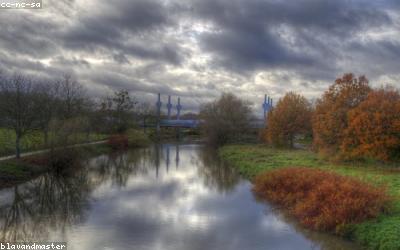
The Hidden Language of Nature
For centuries, the incredible complexity and order of the natural world seemed to defy explanation. How could the twisting branches of a tree, the jagged edges of a coastline, or the swirling patterns of a seashell all emerge from the same fundamental laws of physics? The breakthrough came in the 1970s, when a Polish-American mathematician named Benoit Mandelbrot introduced a new field of study: fractal geometry.
Fractals are infinitely complex patterns that are self-similar across different scales. In other words, they exhibit the same structure no matter how closely you zoom in or out. This property, known as self-similarity, is what gives fractals their characteristic branching, spiraling, or jagged appearance. And as Mandelbrot quickly realized, these mathematical entities weren't just theoretical constructs - they were the hidden language of nature itself.
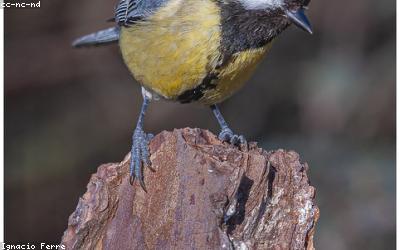
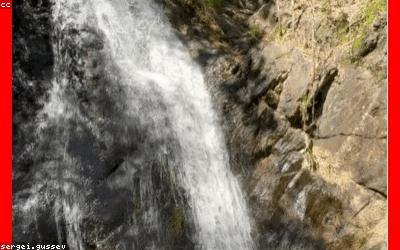
The Fractals All Around Us
From the delicate designs of a snowflake to the mighty sweeps of a galaxy, fractals can be found at every scale of the natural world. The coastline paradox famously demonstrated that the length of a coastline depends on the scale at which it's measured, a property that arises from its fractal nature. Similar fractal patterns can be seen in the branching of rivers and lightning bolts, the clustering of galaxies, and even the intricate geometry of the human circulatory system.
"Clouds are not spheres, mountains are not cones, coastlines are not circles, and bark is not smooth, nor does lightning travel in a straight line." - Benoit Mandelbrot, The Fractal Geometry of Nature
Fractals and Chaos Theory
Fractals are intimately linked to the field of chaos theory, which explores the behavior of complex, non-linear systems. Many of the patterns we observe in nature, from the weather to the stock market, exhibit a high degree of sensitivity to initial conditions - a slight change can lead to dramatically different outcomes. This chaotic behavior is often fractal in nature, with intricate patterns emerging from seemingly simple rules.
The Mathematics of the Natural World
Fractal geometry has revolutionized our understanding of the natural world, providing a mathematical framework for describing the seemingly chaotic and irregular forms found in nature. By using fractal concepts, scientists can now model and predict everything from the branching patterns of trees to the distribution of galaxies in the universe.
This deeper understanding of the fundamental mathematics underlying the natural world has also led to numerous practical applications, from improving medical imaging techniques to enhancing the realism of computer-generated landscapes. As we continue to unravel the secrets of fractals, we gain a greater appreciation for the hidden order and beauty that permeates the world around us.
Comments