Fractal
fractal is one of those subjects that seems simple on the surface but opens up into an endless labyrinth once you start digging.
At a Glance
- Subject: Fractal
- Category: Mathematics, Art, Computer Science
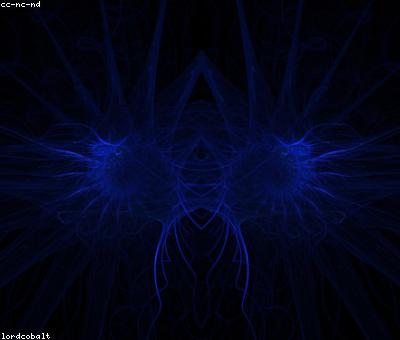
Fractals are mathematical objects that display intricate self-similar patterns across an infinite range of scales. They can be found in the most unexpected places – the leaves on a tree, the meandering course of a river, the crashing of ocean waves. And their study has unlocked a revolutionary new way of understanding the natural world.
The Genius Who Dreamed Up Fractals
Benoit Mandelbrot was a Polish-born mathematician who spent much of his career at IBM's research lab. In 1975, he published a groundbreaking paper that outlined his new theory of "fractals" – a concept he had been mulling over for decades. Mandelbrot recognized that the irregular, fragmented shapes found in nature could not be accurately described using the smooth geometric shapes of classical Euclidean geometry.
Instead, he posited that these natural patterns were in fact the result of repetitive mathematical processes occurring across multiple scales. The famous Mandelbrot set, a mesmerizing fractal image generated by a simple equation, became the iconic representation of this radical new way of seeing the world.
The Mathematics of the Infinitely Complex
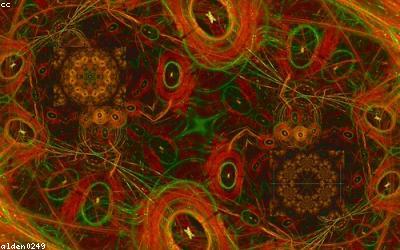
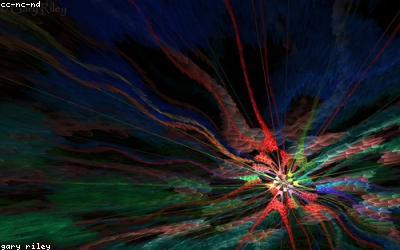
At the heart of fractals is the concept of self-similarity – the idea that a shape is composed of smaller versions of itself, repeating ad infinitum. This self-similarity occurs across an infinite range of scales, creating the dreamlike, endlessly-zooming quality of fractal images.
Fractals are generated through iterated function systems – mathematical formulas that, when repeated over and over, produce these intricate patterns. The Mandelbrot set, for instance, is the result of iterating a simple quadratic equation. By varying the parameters of these equations, an entire fractal geometry can be unlocked, revealing a dazzling hidden world of mathematical beauty.
"Clouds are not spheres, mountains are not cones, coastlines are not circles, and bark is not smooth, nor does lightning travel in a straight line." - Benoit Mandelbrot
Fractals in Computer Graphics
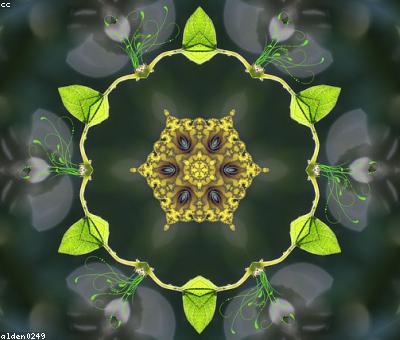
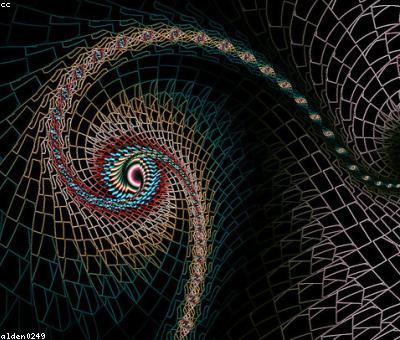
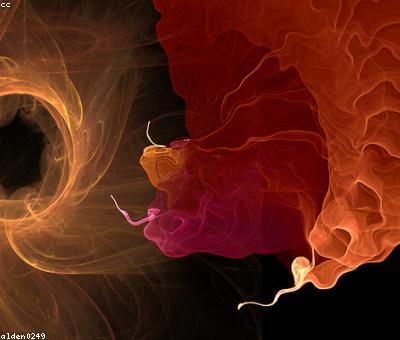
The rise of computer graphics in the 1970s and 80s provided the perfect medium for exploring and visualizing the patterns of fractal geometry. Algorithms like the Chaos Game could generate intricate fractal shapes with just a few lines of code. And as computing power increased, the ability to zoom infinitely into these fractal structures revealed ever-more-complex nested patterns.
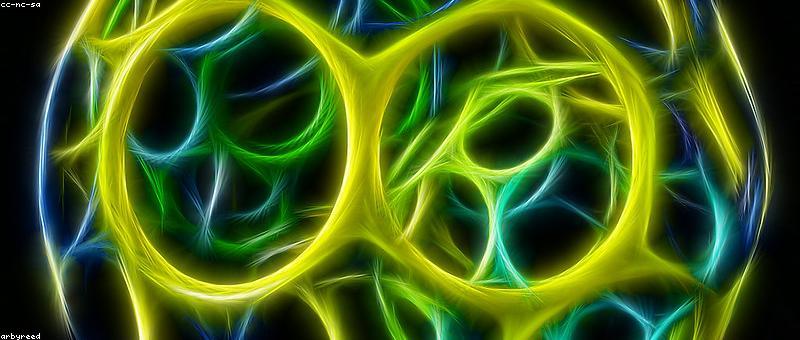
Fractal rendering techniques became an essential tool in computer graphics, allowing artists and animators to create breathtakingly realistic natural environments and organic textures. From the branching trees in Lord of the Rings to the swirling planetary landscapes of Star Wars, fractals have become the building blocks of modern digital fantasy worlds.
Fractals and the Future
The field of fractal geometry has continued to evolve, with new discoveries unlocking an ever-deeper understanding of the natural world. Fractals have found applications in fields as diverse as turbulence modeling, image compression, and even the study of financial markets.
As our computing power continues to grow, the potential of fractals to reveal the hidden order within apparent chaos has never been greater. Who knows what other wonders of the fractal realm are still waiting to be discovered?
Comments