Entropic Gravity
How entropic gravity quietly became one of the most fascinating subjects you've never properly explored.
At a Glance
- Subject: Entropic Gravity
- Category: Theoretical Physics
Entropic gravity. The very name conjures images of black hole singularities, Hawking radiation, and the highest echelons of theoretical physics. But what if we told you that this mind-bending concept quietly underlies some of the most fundamental truths about our universe? From the arrow of time to the nature of dark energy, entropic gravity is a revolutionary idea that is slowly reshaping our understanding of reality itself.

Entropy and the Laws of Thermodynamics
To fully grasp the power of entropic gravity, we must first explore the foundational principles of thermodynamics. Entropy, the measure of disorder in a closed system, is one of the most important and enigmatic concepts in all of physics. The Second Law of Thermodynamics states that entropy must always increase over time - a rock will never spontaneously become less disordered, for example. This irreversible march towards greater disorder is what gives time its distinct direction, the so-called "arrow of time."
But what if gravity itself is a product of this tendency towards entropy? That's the radical hypothesis proposed by the likes of Erik Verlinde and Jacob Bekenstein. Their work suggests that gravity emerges as an entropic force, an inevitable consequence of the universe's statistical preference for higher-entropy states.

The Holographic Principle
Key to the entropic gravity concept is the holographic principle, a mind-bending idea proposed by Gerard 't Hooft and Leonard Susskind. This principle suggests that the information content of any given volume of space can be fully described by the information "encoded" on its boundary surface - just like a 3D hologram is encoded in a 2D image.
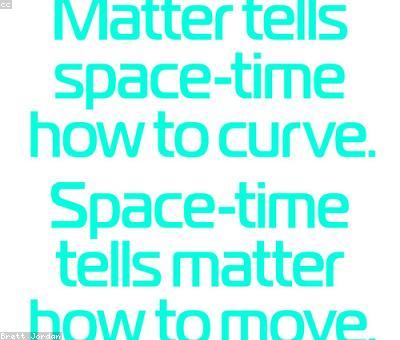
In the context of entropic gravity, this holographic encoding of information is crucial. Verlinde and others argue that gravity arises from the changes in this encoded information, as the system naturally seeks to maximize its entropy. In other words, matter and energy curve spacetime not because of some mysterious force, but because that's the path of least resistance for the flow of information and the increase of disorder.
"Gravity is not a fundamental force of nature, but an emergent phenomenon that arises from the underlying quantum structure of spacetime itself." - Erik Verlinde, Theoretical Physicist

Dark Energy and the Accelerating Universe
One of the most tantalizing implications of entropic gravity is its potential to explain the nature of dark energy - the mysterious "repulsive gravity" that is causing the universe to accelerate its expansion. According to the entropic view, this acceleration is not driven by some exotic new field, but is simply a consequence of the universe's insatiable quest for higher entropy.
As the universe expands, the information content of any given volume decreases, creating an "entropic force" that drives that volume to grow larger still. This feedback loop is what gives rise to the observed acceleration, without the need for additional dark energy components. It's a radical idea, but one that has found increasing support from physicists grappling with the paradoxes of the Lambda-CDM model of cosmology.


The Limits of Entropic Gravity
Of course, entropic gravity is not without its critics and limitations. The theory struggles to reproduce the precise details of gravitational phenomena at small scales, such as the behavior of orbiting planets. And the precise mechanism by which information and entropy give rise to the curvature of spacetime remains murky and speculative.
Moreover, the very foundations of the entropic gravity concept - the holographic principle and the nature of spacetime information - are still hotly debated in the halls of theoretical physics. Many physicists remain skeptical that such lofty, abstract ideas can truly capture the essence of gravity as we observe it in the real world.
Yet the allure of entropic gravity persists. For if it is true, it would represent one of the most radical revolutions in our understanding of the cosmos since General Relativity itself. The implications are staggering, from the origin of the universe to the nature of black holes. And so the search continues, as physicists strive to either confirm or refute this profound and counterintuitive idea.
Comments