Enceladus Hydrothermal Vents
The real story of enceladus hydrothermal vents is far weirder, older, and more consequential than the version most people know.
At a Glance
- Subject: Enceladus Hydrothermal Vents
- Category: Astronomy, Planetary Science, Astrobiology
For decades, astronomers and astrobiologists have been fascinated by the strange geysers erupting from the south pole of Saturn's moon Enceladus. These icy plumes, rich in organic compounds and other tantalizing signs of potential habitability, have fueled dreams of finding microbial life in the moon's subsurface ocean. But the true significance of Enceladus' hydrothermal vents goes far beyond just their astrobiological implications.
The Discovery That Changed Everything
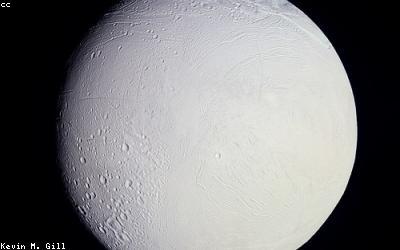
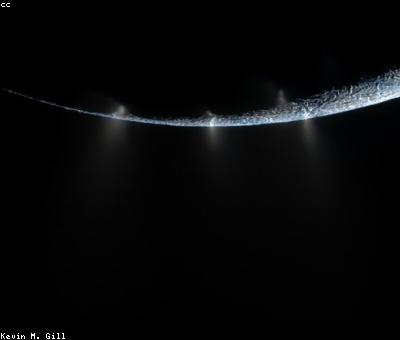
In the early 2000s, NASA's Cassini spacecraft made a series of flybys of Enceladus that revealed the extent of the moon's geologic activity. Images showed massive curtains of water ice, kilometers high, spraying out from long, linear fissures near the south pole. Further analysis determined that these "tiger stripe" features were the surface expressions of a vast, churning subsurface ocean, heated by intense tidal forces from Saturn's gravity.
But the real breakthrough came in 2005, when Cassini detected a faint but distinct plume of water vapor and ice particles erupting from these fissures. Chemical analysis showed the plume contained not just water, but significant amounts of organic compounds, salts, and even tiny rock particles — clear signs that the subsurface ocean was interacting with the moon's rocky interior in a way that resembled Earth's deep-sea hydrothermal vents.
The Enceladus Ocean: Older Than Expected
Further studies of Enceladus' plumes and its overall geologic activity have revealed that this subsurface ocean is older and more persistent than initially thought. Rather than a recent, temporary phenomenon, the Enceladus ocean is now believed to have existed for billions of years, since the moon's formation. This implies the hydrothermal vents have been active and continuously replenishing the ocean with key chemicals and energy sources for an extraordinary length of time.
This has profound implications for the potential for life. On Earth, the deep-sea hydrothermal vent ecosystems, fueled by the chemicals and heat from the seafloor, are considered prime candidates for the origin of life itself. If Enceladus' vents have been operating for billions of years, it vastly increases the window of time for complex prebiotic chemistry and the eventual emergence of living organisms to occur.
"Enceladus may be the best place in the solar system to look for signs of present-day life. The moon's subsurface ocean, heated by hydrothermal activity, could provide the perfect conditions for microbial life to thrive." - Dr. Linda Spilker, Cassini project scientist
A Surprising Connection to Earth
As remarkable as Enceladus' hydrothermal vents are in their own right, they also reveal an unexpected connection to our own planet. Detailed analysis of the plume composition has shown that the chemistry of Enceladus' subsurface ocean is strikingly similar to that of Earth's oceans — with many of the same dissolved minerals, salts, and organic compounds present.
This suggests that the geochemical processes driving hydrothermal activity on Enceladus may be analogous to those on Earth, despite the vast differences in scale and environment. Understanding the dynamics of Enceladus' vents could therefore shed new light on the origins and evolution of Earth's own deep-sea vent ecosystems, which remain poorly understood.
The Hunt for Evidence of Life
With the Cassini mission now complete, the search for evidence of life on Enceladus has taken on new urgency. NASA is currently studying the feasibility of a dedicated mission to the Saturn system that would use a specialized spacecraft to fly through Enceladus' plumes and directly sample the ocean's chemistry and potential biosignatures.
Other proposals call for landing a probe on the moon's surface, near the active tiger stripe fissures, to conduct long-term monitoring and analysis of the hydrothermal vent environment. Either way, scientists are confident that the next generation of Enceladus exploration will provide the strongest clues yet about whether microbial life has indeed taken hold in this remarkable ocean world.
A Profound Cosmic Significance
Beyond its astrobiological significance, Enceladus' hydrothermal vents also have implications that reach far beyond the boundaries of our solar system. The discovery of these active, long-lived vents on a distant moon orbiting a gas giant has challenged many of the assumptions that previously guided the search for habitable worlds and the origins of life.
Enceladus shows that geologically active ocean worlds can exist even in the hostile, radiation-soaked environments of the outer solar system. This expands the potential "habitable zones" that astronomers should consider when searching for life-bearing exoplanets around other stars. It also suggests that the chemistry and energy sources required for the emergence of life may be more common throughout the cosmos than previously thought.
In short, the mystery of Enceladus' hydrothermal vents is far from solved. But what we've learned so far has already transformed our understanding of habitability and the origins of life, both on Earth and in the wider universe.
Comments