Enceladus Hydrothermal
The untold story of enceladus hydrothermal — tracing the threads that connect it to everything else.
At a Glance
- Subject: Enceladus Hydrothermal
- Category: Planetary Science, Astrobiology, Geophysics

The Geysers That Shouldn't Exist
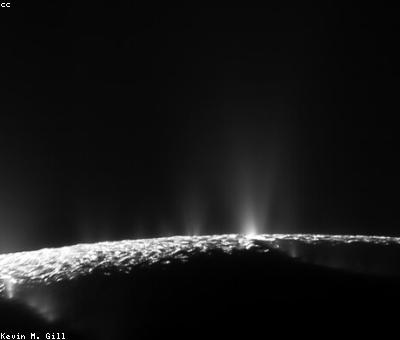
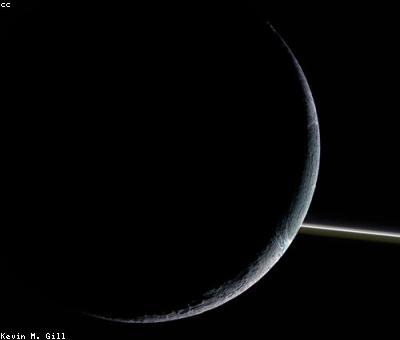
When the Cassini spacecraft first detected towering plumes of water vapor and ice erupting from the south pole of Saturn's moon Enceladus in 2005, it was a discovery that shook the planetary science community to its core. Here was a small, icy world, just 500 kilometers in diameter, somehow generating enough internal heat to power geyser-like eruptions - a feat previously thought impossible for a body so tiny and so far from the Sun.
The prevailing theory at the time was that Enceladus, like many of Saturn's other moons, was a frozen, lifeless husk. Yet the Cassini data revealed a world that was anything but dormant. Beneath its icy crust lay a global ocean, heated by the constant flexing and distortion of Enceladus' interior as it orbited Saturn. And somewhere within that ocean, scientists began to suspect, were hydrothermal vents - the very same kind of feature that supports vibrant ecosystems deep in Earth's oceans.


A Window Into Another World
As Cassini made repeated flybys of Enceladus over the years, the spacecraft's instruments were able to gather ever more detailed data on the composition and structure of the moon's mysterious plumes. What they revealed was a tantalizing glimpse into a hidden realm of hydrothermal activity, one that could hold the key to understanding the origins of life itself.
The plumes were found to contain not just water vapor and ice, but a veritable soup of organic molecules, including some of the building blocks of life such as methane, carbon dioxide, and even complex hydrocarbons. Molecular hydrogen, a byproduct of the chemical reactions that power hydrothermal vents, was also detected in abundance. All of this pointed to the existence of a thriving, if alien, ecosystem deep beneath Enceladus' frozen surface.
"Enceladus is a window into another world - a world that is potentially habitable, and may even be inhabited. The discoveries we've made there have fundamentally changed the way we think about the potential for life in our solar system." - Dr. Linda Spilker, Cassini project scientist
The Potential for Life
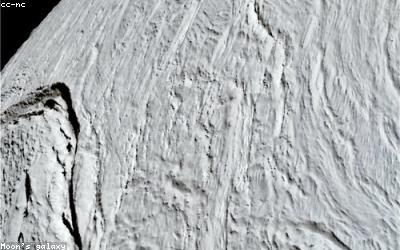
With its global subsurface ocean, internal heat source, and evidence of hydrothermal activity, Enceladus has emerged as one of the most promising places in our solar system to search for signs of extraterrestrial life. The moon's geysers, in particular, offer a unique opportunity to sample and analyze the composition of its hidden ocean, without the need for a costly and complex landing mission.
Indeed, many scientists believe that if life does exist on Enceladus, it is most likely to be found in the form of microbial extremophiles - hardy, single-celled organisms adapted to thrive in the harsh, alien environment of the moon's subsurface ocean. The presence of organic compounds, as well as the chemical energy produced by hydrothermal vents, provides the necessary building blocks and energy sources to support such simple lifeforms.

Exploring the Enceladus Ocean
As exciting as the discoveries about Enceladus have been, there is still much we don't know about the moon's hidden ocean and the potential for life within it. Future missions to Enceladus will be essential to unlock the secrets of this alien world and determine whether it truly is a habitable oasis in the depths of the outer solar system.
One of the most ambitious proposals is the Enceladus Life Finder (ELF) mission, which would send a specialized spacecraft to fly directly through the plumes and collect samples for detailed analysis back on Earth. By studying the organic compounds, minerals, and potential biosignatures present in the plume material, scientists hope to gain unprecedented insights into the nature of Enceladus' subsurface ocean and the possibility of life within it.
Other proposed missions, such as the Enceladus Multiple Flyby and the Enceladus Orbiter, would use different approaches to further explore the moon's geysers, ocean, and interior. With each new discovery, the scientific community grows increasingly excited about the prospect of unlocking the secrets of Enceladus - and perhaps even finding evidence of extraterrestrial life in the process.
Comments