Early Cosmology
How early cosmology quietly became one of the most fascinating subjects you've never properly explored.
At a Glance
- Subject: Early Cosmology
- Category: Science, History
The story of early cosmology is one of the most remarkable journeys in the history of human thought. From the ancient philosophers grappling with the nature of the cosmos, to the pivotal breakthroughs that would transform our understanding of the universe, this field has been a wellspring of fascination, mystery, and profound discovery.
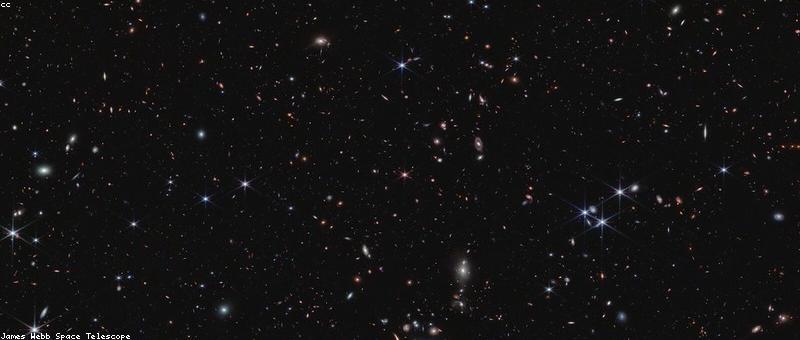
The Heavens Above: Musings of the Ancients
Long before modern astronomy, the skies captivated the imaginations of thinkers across the ancient world. In ancient Greece, figures like Thales of Miletus and Pythagoras pondered the celestial bodies, attempting to discern the underlying order and patterns that governed the heavens. Thales famously predicted a solar eclipse in 585 BCE, a feat that cemented his reputation as a pioneering natural philosopher.
Centuries later, the Ptolemaic system emerged as the dominant cosmological model, with the Earth at the center of a complex arrangement of spheres. This geocentric view, championed by the renowned astronomer Ptolemy, would hold sway for over a millennium, shaping the scientific worldview of the medieval era.
To reconcile the observed motions of the planets with the Ptolemaic model, Ptolemy introduced the concept of epicycles - circles within circles that allowed for the complex dance of the celestial bodies. This intricate system, while mathematically sophisticated, was a far cry from the elegant simplicity that would later emerge.
A Heliocentric Revolution
The dawn of the Renaissance ushered in a new era of scientific inquiry, and with it, a radical rethinking of the cosmic order. In 1543, the seminal work "On the Revolutions of the Celestial Spheres" by Nicolaus Copernicus proposed a startling hypothesis: the Sun, not the Earth, was at the center of the universe.
Copernicus' heliocentric model, though initially met with skepticism, would eventually gain widespread acceptance. The work of Galileo Galilei, who observed the moons of Jupiter and saw the phases of Venus, lent further credence to the Copernican revolution.
"And yet it moves." - Galileo Galilei, in reference to the Earth's motion around the Sun.

The Birth of Modern Cosmology
The 17th and 18th centuries saw the emergence of a new scientific paradigm, one that would forever change our understanding of the cosmos. Isaac Newton's groundbreaking work on gravity and the laws of motion provided a unifying framework for the behavior of celestial bodies, while Edmond Halley's prediction of the comet that bears his name demonstrated the power of this new approach.
In the early 19th century, Immanuel Kant and Pierre-Simon Laplace proposed the Nebular Hypothesis, a theory that the Solar System formed from the gradual collapse of a vast cloud of gas and dust. This seminal idea would lay the foundation for our modern understanding of planetary formation.

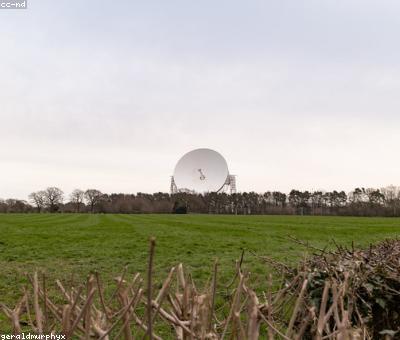
Embracing the Cosmos: A Never-Ending Quest
The 20th century saw an explosion of progress in cosmology, with the groundbreaking work of Albert Einstein and the development of general relativity fundamentally reshaping our conception of the universe. The discovery of cosmic microwave background radiation in 1964 provided powerful evidence for the Big Bang theory, and the subsequent revelations about the expansion of the universe and the existence of dark matter and dark energy have continued to push the boundaries of our understanding.
As we gaze upon the vast expanse of the cosmos, the story of early cosmology stands as a testament to the power of human curiosity and the relentless pursuit of knowledge. From the ancient musings of philosophers to the cutting-edge discoveries of modern astrophysicists, this field has captivated the imagination of countless individuals, and its impact on our worldview cannot be overstated.
Comments