Cultural Evolution
The deeper you look into cultural evolution, the stranger and more fascinating it becomes.
At a Glance
- Subject: Cultural Evolution
- Category: Anthropology, Sociology, Cultural Theory
From the moment we're born, we're immersed in a complex web of cultural behaviors, beliefs, and artifacts. The way we dress, speak, interact, and make sense of the world is shaped by the society we grow up in. But this culture isn't static - it's constantly evolving, mutating, and spreading like a living organism.

The Meme Machine
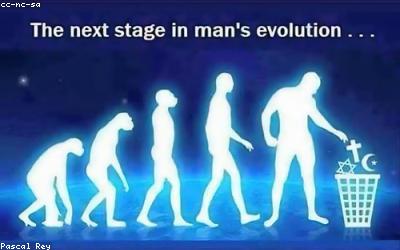
In his groundbreaking book, The Meme Machine, scientist Susan Blackmore posits that culture itself can be viewed as a replicating system, akin to biological evolution. Just as genes are the basic units of biological inheritance, Blackmore argues that "memes" - discrete cultural units like ideas, skills, habits, and beliefs - are the building blocks of cultural evolution.
Like genes, memes compete for "reproduction" - the more an idea or behavior is copied and transmitted, the more it will spread through a population. And just as genetic mutations can lead to new species, so too can variations in memes result in novel cultural forms. The internet, for example, has acted as a vast "meme machine", accelerating the spread and mutation of cultural information at an unprecedented pace.
The Ratchet Effect
One of the key features that distinguishes cultural evolution from biological evolution is the "ratchet effect". While genetic evolution tends to be a gradual, incremental process, cultural evolution can progress in sudden leaps, with each innovation building upon and amplifying the last.
Sociologist Joseph Henrich calls this the "cumulative cultural evolution" - the tendency for cultural knowledge and technology to accumulate over time, becoming increasingly complex and specialized. Unlike our genetic blueprint, which remains relatively static, our cultural toolkit is constantly being upgraded, often in dramatic bursts of creativity and discovery.
"Culture is not just this passive thing that we're all trapped in. It's an active, dynamic process that we're constantly shaping and re-shaping." - Joseph Henrich, Professor of Human Evolutionary Biology

The Mysterious Rise of Civilizations
This ratcheting process of cultural evolution helps explain the meteoric rise of human civilizations throughout history. From the first agricultural settlements to the global interconnected world of today, each society has built upon the cultural achievements of the ones before it.
Anthropologist Jared Diamond has famously argued that environmental factors like geography and natural resources played a key role in determining which societies were able to develop more complex, technologically advanced cultures. But the underlying mechanism, he suggests, is this self-amplifying cycle of cultural evolution.

Culture as a Superorganism
Taking the parallels with biological evolution even further, some scholars have begun to conceptualize human culture as a kind of "superorganism" - a vast, interconnected system that exhibits emergent properties transcending the individual parts.
Just as an ant colony or beehive can be viewed as a single living entity, with its own behaviors, social structures, and evolutionary dynamics, so too can human civilizations be seen as macro-scale cultural organisms. They reproduce, adapt, and respond to environmental pressures in ways that shape the trajectory of our species as a whole.

The Future of Cultural Evolution
As our technologies continue to advance at a dizzying pace, the future of cultural evolution becomes increasingly difficult to predict. Will the internet and global connectivity lead to greater cultural homogenization, or will it spawn ever-more diverse and fragmented belief systems and social structures?
One thing is certain: the ability to understand and harness the principles of cultural evolution will be crucial for navigating the challenges and opportunities that lie ahead. From combating misinformation to designing more resilient social institutions, the insights of cultural theory may hold the key to shaping a better future for humanity.
Comments