Cryptography Throughout History
Most people know almost nothing about cryptography throughout history. That's about to change.
At a Glance
- Subject: Cryptography Throughout History
- Time span: Over 4,000 years, from ancient Egypt to the digital age
- Key figures: Julius Caesar, Al-Kindi, William Friedman, Whitfield Diffie
- Major developments: From simple substitution ciphers to complex quantum encryption
- Impact: Shaping warfare, espionage, privacy, and global security
- Category: History, Technology, Security

Ancient Secrets: The Dawn of Cryptography
Imagine scribbling coded messages on papyrus that could outwit spies — a practice as old as civilization itself. The earliest known use of cryptography dates back to ancient Egypt around 1900 BCE. Pharaohs' scribes employed hieroglyphs and hieratic symbols to conceal secrets from enemies. But the first true cipher — one that intentionally replaced symbols — was probably the Caesar cipher, attributed to Julius Caesar himself, around 58 BCE. This simple shift cipher shifted letters by a fixed number, usually three, and it was so straightforward that soldiers could encode commands quickly. Yet, even this primitive method was revolutionary — sending messages that couldn't be easily understood by enemies.
Did you know that Al-Kindi, a 9th-century Arab philosopher, was among the first to describe the techniques of frequency analysis? His treatise, Risalah fi Istikhraj al-Mutanabir, explained how to break simple substitution ciphers, effectively exposing their vulnerabilities. It was a turning point — cryptography was no longer just about secret writing but about understanding the mathematics behind it. This knowledge was tightly guarded, often kept within royal courts or military arsenals, setting the stage for centuries of cryptographic arms races.
The Middle Ages and the Rise of Formal Cryptography
The medieval period saw the development of more sophisticated ciphers, especially in Europe and the Islamic world. Notably, the Vigenère cipher, often called "le chiffre indéchiffrable" (the indecipherable cipher), was developed in the 16th century. It used a keyword to create a polyalphabetic cipher that was much harder to crack than Caesar's simple shift. For centuries, it stymied codebreakers — until Charles Babbage and Friedrich Kasiski independently discovered methods to crack it in the 19th century.
Throughout this era, cryptography was primarily used by monarchs, military commanders, and secret societies. The Babington Plot of 1586, an attempt to assassinate Queen Elizabeth I, was uncovered thanks to deciphered letters — highlighting cryptography's role in espionage that still resonates today.
The 20th Century: Cryptography Becomes a Science
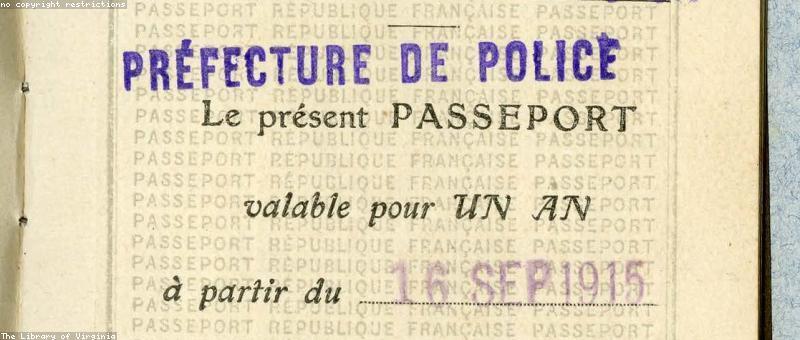
The dawn of the 20th century marked a seismic shift. Cryptography transitioned from an art practiced by select individuals to a rigorous science. During World War I, cryptography's importance skyrocketed with the use of machines like the German Enigma cipher machine. Developed by Arthur Scherbius in the 1920s, Enigma's complex rotors created an astonishing number of possible encryptions — estimated at 150 million million million. But the tide turned when British mathematician and cryptanalyst Alan Turing led efforts at Bletchley Park to crack Enigma. His team developed the first programmable computer, Colossus, to automate codebreaking, effectively shortening the war and saving millions of lives.
"Turing's work did not just crack a code; it unlocked the future of computer science," — Dr. Emily Carter, historian of cryptography.
Meanwhile, the United States developed the SIGABA machine, used by American and British forces, which remained unbroken for years. This era saw cryptography's transformation from paper and pencil to electromechanical devices — setting the stage for digital encryption.
Modern Cryptography and the Digital Age
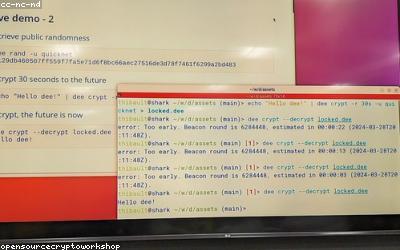
As computers became household staples in the late 20th century, so too did the need for secure digital communication. The invention of the Data Encryption Standard (DES) in the 1970s marked a turning point. Yet, DES's relatively short key length made it vulnerable, prompting the development of more advanced algorithms. Enter the RSA algorithm, named after Rivest, Shamir, and Adleman, who created it in 1977. RSA introduced public-key cryptography — a revolutionary concept where encryption and decryption keys differ, enabling secure online transactions and digital signatures.
Today, cryptography is woven into our daily lives — from securing your bank account to protecting sensitive government communications. Quantum cryptography, which leverages principles of quantum mechanics, promises virtually unbreakable security, but also raises existential questions about the future of encryption.
The Hidden World of Cryptography's Shadow Battles
Behind the scenes, secret agencies have fought covert battles with cryptography. The NSA’s Clipper Chip in the 1990s was an infamous attempt to create a backdoored encryption standard — an effort to allow government access to private communications. Public outrage and technological limitations doomed it, but the debate about privacy versus security persists today.
Another little-known fact is that the GCHQ in the UK employed a secret code-breaking operation called Station X during World War II — an elite team of mathematicians and linguists who cracked Axis ciphers. Their work laid the foundation for modern cryptanalysis, often in absolute secrecy.

What the Future Holds: Quantum and Beyond
The race is on. Quantum computers threaten to render current cryptographic standards obsolete. Governments and corporations are investing billions in post-quantum cryptography, algorithms designed to withstand quantum attacks. But some believe that quantum encryption — like quantum key distribution — could make eavesdropping impossible, forever changing the game.
One groundbreaking experiment in 2022 by researchers in China successfully transmitted quantum-encrypted messages across a record-breaking 1,200 kilometers — an eye-opening glimpse into a future where privacy is literally unbreakable.
And yet, the true secret might lie in a world we haven't yet imagined, where the lines between encryption and chaos blur. Cryptography's history isn't just about hiding secrets; it's about defending the very essence of trust in an increasingly interconnected universe.
Comments