Confirmation Bias
What connects confirmation bias to ancient empires, modern technology, and everything in between? More than you'd expect.
At a Glance
- Subject: Confirmation Bias
- Category: Psychology, Cognitive Bias
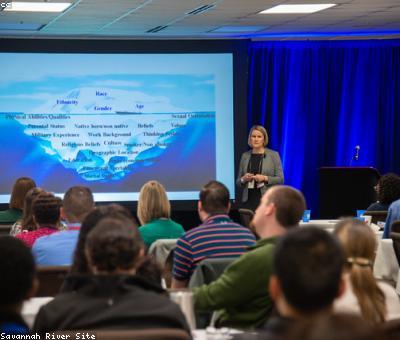
At first glance, confirmation bias might seem like a simple, well-understood concept - the human tendency to focus on information that confirms our existing beliefs and ignore or dismiss contradictory evidence. But the roots and implications of this powerful cognitive quirk stretch back centuries, and its influence can be seen in fields as diverse as politics, technology, and even ancient history.


The Origins of Confirmation Bias
The concept of confirmation bias has been observed by philosophers and thinkers for millennia, though the term itself wasn't coined until the 1960s. As early as the 5th century BCE, the Greek historian Thucydides noted how people tend to "make use of a summary judgment in most cases, and 'they do not bother to inquire for facts'." This tendency to seek out information that aligns with our preexisting views was also documented by influential Islamic scholar Al-Jahiz in the 9th century.
However, it wasn't until the 1960s that confirmation bias was formally defined and studied by British psychologist Peter Wason. Through a series of experiments, Wason demonstrated how people consistently fail to seek out information that might disprove their hypotheses, instead favoring evidence that confirms their existing beliefs. This bias, Wason argued, was a fundamental flaw in human reasoning that had wide-ranging implications.



Confirmation Bias in History and Politics
The far-reaching influence of confirmation bias can be seen throughout history. In the 17th century, for example, the astronomer Galileo Galilei faced intense opposition from the Catholic Church for his support of the Copernican heliocentric model of the solar system. The Church, invested in the prevailing Ptolemaic geocentric model, dismissed Galileo's observations and evidence as invalid or heretical.
Centuries later, confirmation bias continues to shape political discourse and public opinion. A striking example can be found in the 2016 US presidential election, where voters on both sides of the political divide selectively consumed news and information that aligned with their preexisting political leanings, while ignoring or discrediting contradictory evidence. This phenomenon, sometimes referred to as the "filter bubble," has only been exacerbated by the rise of social media and personalized algorithms.
"We can selectively search for, interpret, focus on, and remember information in a way that confirms our preexisting beliefs or hypotheses. Once we have formed a view, we accept 'confirming' evidence at face value while subjecting 'disconfirming' evidence to much greater scrutiny." - Professor Daniel Kahneman, Nobel Laureate in Economics

Confirmation Bias in the Digital Age
The ubiquity of the internet and social media has amplified the effects of confirmation bias in unprecedented ways. Online, people can curate their information streams to include only sources that reinforce their existing beliefs, while dismissing or attacking contradictory information as "fake news." This self-selection of information can lead to the formation of ideological "echo chambers," where individuals are surrounded by like-minded views and become increasingly resistant to outside perspectives.
Moreover, the design of many social media platforms and recommendation algorithms tends to favor content that is engaging and emotionally charged, which often means content that aligns with pre-existing biases. As a result, users may be inadvertently exposed to a steady diet of information that confirms their biases, further entrenching their views and making them less open to alternative perspectives.
Combating Confirmation Bias
Recognizing and mitigating the effects of confirmation bias is crucial in an age of information overload and polarized discourse. Experts suggest a range of strategies, from actively seeking out contradictory evidence to cultivating intellectual humility and a willingness to change one's mind.
One promising approach is to encourage critical thinking and the scientific method - habits of mind that emphasize objectivity, evidence-based reasoning, and the importance of challenging one's own assumptions. By fostering these skills, individuals can become more adept at recognizing and overcoming their own cognitive biases.
Additionally, some have argued for structural changes to the design of social media platforms and recommendation algorithms, with the goal of promoting a more diverse and balanced information diet for users. While the challenges are significant, combating confirmation bias remains a critical task for individuals and societies navigating the 21st century information landscape.
Comments