Complexity In Nature
complexity in nature is one of those subjects that seems simple on the surface but opens up into an endless labyrinth once you start digging.
At a Glance
- Subject: Complexity In Nature
- Category: Natural Science
Fractals in the Natural World
One of the fundamental drivers of complexity in nature is the ubiquitous presence of fractals. These intricate, self-similar patterns can be found everywhere from the branches of trees to the curves of coastlines. Renowned mathematician Benoit Mandelbrot first introduced the concept of fractals in the 1970s, describing them as "the fingerprints of nature."
The Mandelbrot set, a fractal shape derived from a simple mathematical equation, is perhaps the most famous example of fractal geometry in action. When visualized, it reveals an intricate world of swirling tendrils and bulbous forms that mirror the organic complexity we see all around us.

Emergent Complexity
But fractals are just the beginning. Many of nature's most astonishing feats of complexity arise not from a single, simple rule, but from the interactions of many individual components. This is the realm of emergent complexity, where simple rules can give rise to staggeringly intricate systems.
The classic example is the humble ant colony. Each ant follows a few basic behavioral guidelines, like responding to pheromone trails and moving food back to the nest. Yet together, millions of ants can construct elaborate underground cities, complete with ventilation systems, food storage chambers, and even "garbage dumps." This level of organization emerges not from a master plan, but from the aggregation of many individual actions.
"The whole is greater than the sum of its parts." - Aristotle
This principle of emergence can be seen in countless other natural phenomena, from the flocking patterns of birds to the neural networks of the human brain. By understanding these self-organizing systems, scientists are unlocking the secrets of how complex behaviors and structures can arise from simple rules.
Chaos and Fractals in Weather
One of the most dramatic examples of emergent complexity in nature is the weather. Meteorologists have long struggled to accurately predict the weather beyond a few days, due to the inherent unpredictability of the atmosphere. This sensitivity to initial conditions, known as the chaos theory, is a hallmark of complex systems.
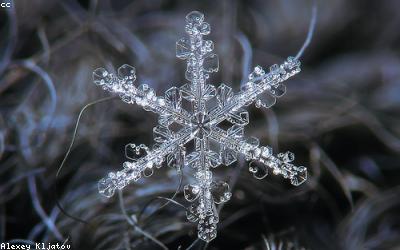
Fractal patterns also play a crucial role in weather and climate. The branching networks of rivers, the meandering shapes of clouds, and the intricate edges of snowflakes all exhibit the telltale signs of fractal geometry. By understanding these fractal patterns, scientists can better model and predict the behavior of the atmosphere.
Biological Complexity
Of course, the pinnacle of natural complexity is found in the living world. From the mind-boggling intricacy of the human body to the collaborative genius of social insects, biology is teeming with examples of emergent complexity.
Consider the human brain, with its 86 billion neurons and trillions of synaptic connections. This neural network is capable of feats like consciousness, creativity, and self-awareness that emerge from the collective activity of its parts. Or look at the way a colony of termites can construct towering mounds, complete with temperature-regulating ventilation systems, without any central planning or hierarchy.
Biological systems are also rife with fractal patterns, from the branching of blood vessels to the spiral arrangements of sunflower seeds. These fractal structures optimize energy and resource distribution, conferring evolutionary advantages to the organisms that possess them.
The Limits of Understanding
As we delve deeper into the rabbit hole of natural complexity, it becomes clear that there is still so much we don't understand. The more we learn, the more we realize the sheer scale and depth of the complexity that surrounds us.
Chaos theory, fractals, emergence - these concepts have revolutionized our understanding of the natural world. But they also highlight the inherent unpredictability and uncertainty that lies at the heart of complex systems. Perhaps the greatest lesson of complexity in nature is that there will always be more to discover, more to ponder, and more to marvel at.
Comments