Climate Refugees
How climate refugees quietly became one of the most fascinating subjects you've never properly explored.
At a Glance
- Subject: Climate Refugees
- Category: Environmental Policy, Human Migration, Sociology
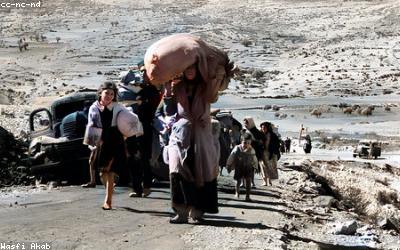
The word "refugee" conjures images of war-torn nations, fleeing families, and desperate encampments. But climate change is ushering in a new kind of refugee – one who is quietly, invisibly displaced by the slow creep of environmental disaster. In the coming decades, hundreds of millions could be on the move, uprooted not by armies, but by rising seas, withering agriculture, and the ravages of extreme weather. Their flight is no less fraught, but it happens without the dramatic headlines.

An Overlooked Crisis in the Making
The global refugee crisis is often discussed in the context of political conflicts and military violence. But as the planet warms, a parallel crisis is taking shape – one driven not by warfare, but by the inexorable forces of a changing climate. In 2019, the Internal Displacement Monitoring Centre reported that natural disasters displaced three times as many people as conflict and violence. By 2050, the World Bank estimates that climate change could force 216 million people to migrate within their own countries.
These "climate refugees" face an uncertain future. Unlike traditional refugees fleeing war or persecution, they often have no clear legal status or pathway to asylum. Most are displaced within their own countries, leaving them without the protections afforded to those who cross international borders. Even for those who do manage to seek refuge abroad, the international community has been slow to recognize climate change as grounds for asylum.


Drowning Islands and Vanishing Coastlines
Perhaps the most visible manifestation of climate-driven displacement is the plight of island nations and low-lying coastal regions. From the Maldives to Kiribati, entire island populations are facing an existential threat as sea levels rise. In 2020, researchers estimated that by 2100, around 200 million people could be displaced by rising seas – a figure that could double by 2200 if emissions continue unabated.
The inhabitants of these disappearing lands are not just losing their homes, but their entire way of life. "When the land goes, the culture goes," says Anote Tong, former president of Kiribati. "We are not just talking about people losing their homes. We are talking about the death of a culture, a people, a nation."
"When the land goes, the culture goes. We are not just talking about people losing their homes. We are talking about the death of a culture, a people, a nation." Anote Tong, former president of Kiribati

The Distress of Disappearing Livelihoods
Climate change is also driving displacement through its devastating impact on agriculture and natural resources. Droughts, floods, and desertification are rendering once-arable lands uninhabitable, forcing farmers and herders to abandon their traditional ways of life.
In sub-Saharan Africa, for example, the steady encroachment of the Sahara desert has disrupted the delicate balance of pastoral societies, leading to violent clashes between nomadic groups competing for dwindling resources. And in Central America, a series of severe droughts has decimated coffee and subsistence crop yields, fueling a wave of migration towards the United States.

An Uncertain Future
As the impacts of climate change intensify, the number of people displaced by environmental factors is only expected to grow. Yet the international community remains ill-equipped to handle this emerging crisis. There is no universally accepted legal framework for defining or protecting climate refugees, leaving them in a precarious limbo.
Some nations, like New Zealand, have begun exploring the possibility of creating new visa categories for climate-displaced people. Others, like the small island nation of Vanuatu, are pushing for the UN to recognize climate change as grounds for asylum. But progress has been painfully slow, hampered by political inertia and the sheer scale of the challenge.
In the meantime, the human cost of climate displacement continues to mount. Families are torn apart, cultures are erased, and the most vulnerable are left to confront an uncertain future alone. As the world grapples with the realities of a warming planet, the plight of climate refugees demands our urgent attention and action.
Comments