Chaos Theory In Art And Design
The deeper you look into chaos theory in art and design, the stranger and more fascinating it becomes.
At a Glance
- Subject: Chaos Theory In Art And Design
- Category: Artistic Movements & Design Philosophy
- First Noticed: Early 20th Century, Gained Momentum in the 1960s
- Key Figures: Jackson Pollock, Buckminster Fuller, Julie Mehretu
- Core Concept: The unpredictable beauty of chaos manifests in aesthetic innovation

The Birth of Chaos in Artistic Expression
Imagine standing in a gallery, surrounded by splatters, spirals, and seemingly random arrangements. What appears to be chaos at first glance is actually a carefully curated chaos — a symphony of unpredictability captured by artists who dared to defy tradition. The roots of chaos theory in art stretch back to the early 20th century, when avant-garde artists began experimenting with spontaneous techniques that broke away from realism and ordered composition.
One of the earliest pioneers was Jackson Pollock, whose drip paintings in the late 1940s and early 1950s embodied chaos theory long before it was formally named. Pollock's action paintings, with their tangled webs of paint, reflect the unpredictability of fluid motion and the complex interactions of forces — mirroring the mathematical principles of chaos that would emerge decades later.


Mathematics Meets Creativity: The Formal Roots of Chaos Theory
Chaos theory as a scientific discipline was born in the 1960s, thanks to mathematicians like Edward Lorenz and Benoît Mandelbrot. Lorenz's discovery of sensitive dependence on initial conditions — popularly known as the "butterfly effect" — challenged traditional notions of predictability. Mandelbrot's work on fractals revealed that complex, self-similar patterns emerge from simple mathematical rules, echoing the intricate designs found in nature.
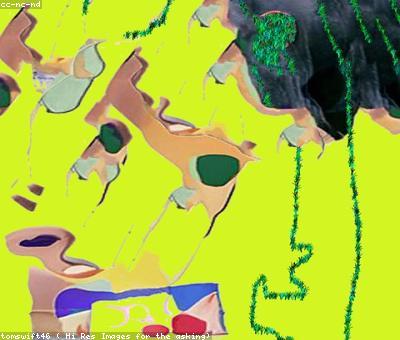
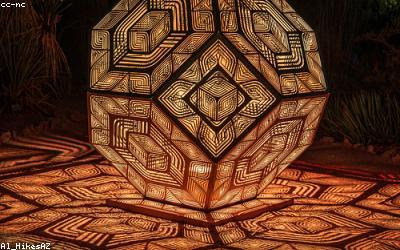
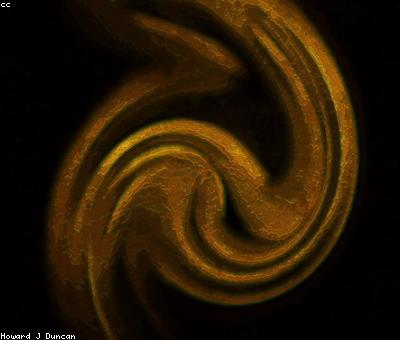
Artists and designers quickly saw the potential for these ideas to revolutionize their fields. The fractal landscapes of Mandelbrot's mathematics inspired a wave of abstract art that celebrated irregular yet patterned structures. Fractal art became a new frontier, merging computational algorithms with aesthetic expression, demonstrating that chaos can be not only beautiful but also mathematically precise.
Chaos in Modern Digital Art and Design
Fast forward to the 21st century, where digital tools have democratized access to chaos-inspired creation. Generative art — created through algorithms that incorporate randomness — embodies chaos theory's principles. Artists like Julie Mehretu utilize layered, dynamic compositions that evoke complex systems, weather patterns, and urban growth.
Designers employ chaos-inspired algorithms to craft visuals that feel alive and unpredictable. Websites and branding now often feature fractal-inspired motifs, emphasizing organic complexity over rigid structure. As one leading digital artist quips, "Chaos is the new order." This mindset fuels innovation across industries, blurring the line between the natural and the synthetic.

Chaos and the Philosophy of Aesthetic Disorder
"Beauty, in chaos, is not disorder — it's the universe revealing its secrets in patterns unseen."
This provocative statement captures a core idea: chaos reveals an underlying order that we can only glimpse through disorder. Many modern artists deliberately embrace randomness — pouring paint, tossing digital pixels, or improvising choreography — challenging traditional notions of harmony and balance.
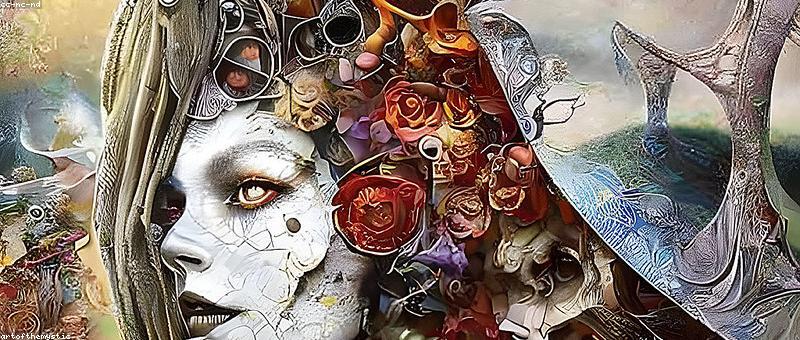
Julie Mehretu's large-scale paintings, for instance, are layered maps of chaos — urban grids, storm systems, abstract calligraphy — each revealing an unseen interconnectedness. Her work suggests that chaos isn't a flaw but a feature — an essential component of creativity that mirrors the universe itself.
The Ethical and Cultural Implications of Embracing Chaos
In a world increasingly obsessed with control and predictability, embracing chaos in art and design offers a radical act of liberation. It encourages embracing uncertainty, complexity, and the unpredictable nature of life. Artists and designers who harness chaos challenge us to rethink order — be it social, political, or aesthetic — and to find beauty in the unexpected.
Consider the rise of chaos-inspired architecture, which defies rectilinear conventions, or the spontaneous improvisation in street art that captures fleeting urban moments. These forms reflect a collective understanding that chaos, when wielded creatively, can forge new paths — both visually and philosophically.
In this light, chaos becomes less of a threat and more of a playground — a realm where innovation thrives when we surrender to the unpredictable patterns that shape our world.

Comments