Cern
Most people know almost nothing about cern. That's about to change.
At a Glance
- Subject: Cern
- Category: Particle Physics, Experimental Physics, Scientific Research
The World's Largest Physics Experiment
CERN, the European Organization for Nuclear Research, is the world's largest and most famous particle physics laboratory. Located just outside Geneva, Switzerland, this cutting-edge research facility is home to the Large Hadron Collider (LHC), the most powerful particle accelerator ever built.
The LHC is a 27-kilometer ring-shaped tunnel buried hundreds of meters underground, where protons and heavy ions are accelerated to nearly the speed of light and smashed together. These high-energy collisions produce a wide range of exotic subatomic particles, including the famous Higgs boson, which was discovered at CERN in 2012. By analyzing the debris from these collisions, scientists at CERN are able to study the most fundamental building blocks of the universe and unravel the deepest secrets of matter and energy.
A Global Collaborative Effort
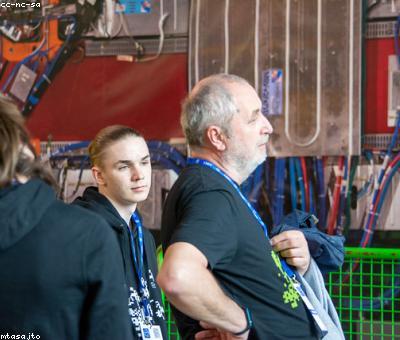
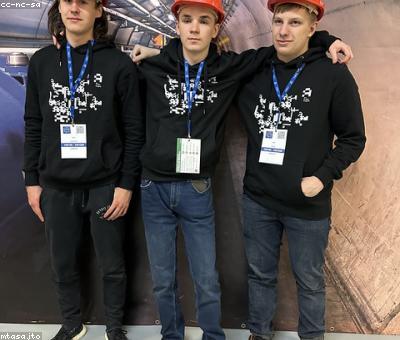
CERN is not owned or operated by any single country. Instead, it is a cooperative venture involving 23 member states from across Europe, as well as numerous associate member states and observer states from around the world. Over 10,000 scientists, engineers, and support staff from more than 100 countries work together at CERN, making it one of the most international scientific collaborations in history.
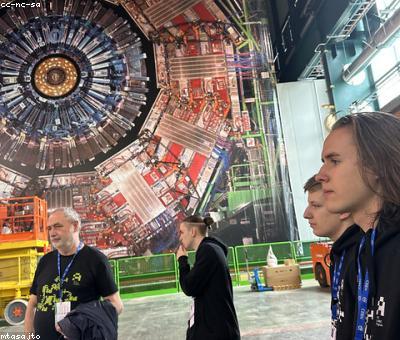
The immense scale and complexity of CERN's experiments require an unprecedented level of global cooperation. Each of the LHC's four main particle detectors – ATLAS, CMS, ALICE, and LHCb – is operated by a collaboration of thousands of researchers from hundreds of universities and research institutes worldwide. This shared effort not only enables the most ambitious experiments in particle physics, but also fosters a culture of scientific openness and cross-border exchange of knowledge.
"CERN is a testament to the power of international collaboration in pursuit of bold scientific discovery. By working together across borders, we are able to push the boundaries of what's possible and uncover the fundamental truths of our universe." - Professor Fabiola Gianotti, Director-General of CERN
Cutting-Edge Technology and Infrastructure
The technological feats achieved at CERN are nothing short of awe-inspiring. The Large Hadron Collider, for example, is an engineering marvel that uses superconducting magnets to guide and accelerate particles to energies up to 13 TeV (13 trillion electron volts) – nearly 7 times more powerful than any previous particle accelerator.
To support these groundbreaking experiments, CERN has built an unparalleled infrastructure, including vast underground caverns to house the particle detectors, a 3.8-kilometer-long linear accelerator, and a distributed computing network known as the Worldwide LHC Computing Grid. This global grid of interconnected data centers allows CERN's researchers to process and analyze the staggering amounts of data generated by the LHC experiments.
Pushing the Boundaries of Human Knowledge
At the heart of CERN's mission is a relentless pursuit of scientific discovery. By pushing the boundaries of particle physics, CERN researchers aim to uncover the most fundamental building blocks of the universe and deepen our understanding of the laws of nature.
Beyond the celebrated Higgs boson discovery, CERN's experiments have yielded a wealth of other groundbreaking findings, including the first observation of the W and Z bosons in the 1980s, the discovery of the top quark in the 1990s, and the recent detection of gravitational waves. These discoveries have not only validated key predictions of the Standard Model of particle physics, but also opened up new frontiers for exploration.
As CERN continues to push the boundaries of what's possible in particle physics, its impact extends far beyond the realm of pure science. The innovations and technological advancements made at CERN have had profound ripple effects across numerous industries, from medical imaging and cancer treatment to the development of the World Wide Web.
In the end, CERN's true legacy may be the way it has inspired and captivated the public imagination. By delving into the most fundamental questions about the nature of our universe, CERN has captured the hearts and minds of people around the world, reminding us all of the boundless potential of human curiosity and scientific exploration.
Comments