Benoit Mandelbrot
How benoit mandelbrot quietly became one of the most fascinating subjects you've never properly explored.
At a Glance
- Subject: Benoit Mandelbrot
- Category: Mathematics, Science, Technology
Benoit Mandelbrot was a Polish-born mathematician who made groundbreaking contributions to the field of fractal geometry. While his name may not be a household word, his work has had a profound impact on our understanding of the natural world and the ways in which complex systems can be modeled and analyzed.
The Man Behind the Mandelbrot Set
Born in 1924 in Warsaw, Poland, Mandelbrot was the son of a tailor who fled to France as a young man to escape the Nazis. Despite the hardships of his early life, Mandelbrot went on to become one of the most influential mathematicians of the 20th century. After earning his Ph.D. from the University of Paris in 1952, he spent much of his career working at IBM's research laboratories, where he was given the freedom to explore his own unconventional ideas.
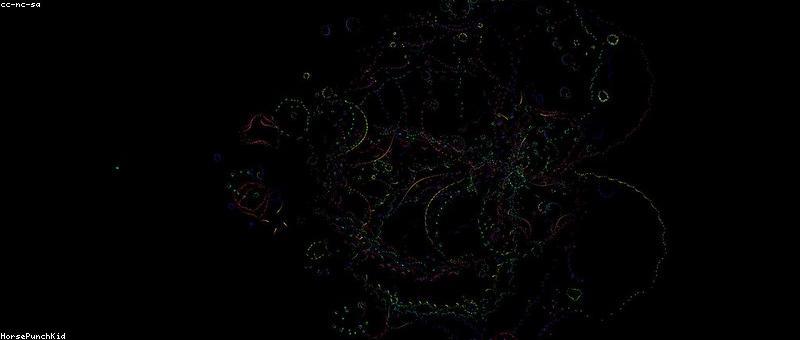
Fractals and the Beauty of Chaos
Mandelbrot's fascination with fractals, or the repeating patterns that can be found in nature, led him to develop a new way of thinking about the world around us. He recognized that many natural phenomena, from the branching of trees to the coastlines of continents, could be understood as fractal structures. By applying the principles of fractal geometry, Mandelbrot was able to describe and model these complex systems in ways that were previously impossible.
"Clouds are not spheres, mountains are not cones, coastlines are not circles, and bark is not smooth, nor does lightning travel in a straight line." - Benoit Mandelbrot
Mandelbrot's insights had far-reaching implications, from the field of computer graphics to the study of financial markets. His work challenged the traditional, linear way of thinking about the world and opened up new avenues of research and exploration.
The Legacy of Benoit Mandelbrot
Mandelbrot's influence can still be felt today, nearly a decade after his death in 2010. His groundbreaking work on fractals and chaos theory has inspired a new generation of scientists, artists, and thinkers to explore the hidden patterns and complexities of the natural world. From the intricate branching patterns of trees to the chaotic movements of stock markets, Mandelbrot's ideas have transformed the way we understand and interact with the world around us.
The Beauty and the Mystery
Mandelbrot's legacy is not just one of scientific achievement, but also of artistic inspiration. The Mandelbrot set, with its intricate and captivating patterns, has become a symbol of the beauty and complexity that can be found in the natural world. Artists, designers, and even musicians have been inspired by Mandelbrot's work, using fractal principles to create stunning and innovative works of art.
Yet, for all of Mandelbrot's groundbreaking discoveries, there is still much that remains unknown and mysterious about the world of fractals and chaos theory. As we continue to explore these fascinating realms, the legacy of Benoit Mandelbrot will undoubtedly continue to inspire and challenge us, pushing the boundaries of our understanding and revealing the hidden wonders of the universe.
Comments