Automatic Cipher Machines
automatic cipher machines sits at the crossroads of history, science, and human curiosity. Here's what makes it extraordinary.
At a Glance
- Subject: Automatic Cipher Machines
- Category: Cryptography, Mechanical Engineering
- Invented: Early 20th Century
- Purpose: Automating the encryption and decryption of messages
- Examples: Enigma, Typex, Hagelin Cipher Machine
The Dawn of Automated Encryption
The history of automatic cipher machines began in the early 20th century, as the need for secure communication became increasingly critical in an age of global conflict. Traditional manual encryption methods, such as pencil-and-paper ciphers, were slow, error-prone, and vulnerable to skilled code-breakers. This realization spurred a race to develop machines that could automate the encryption and decryption of messages, ensuring greater speed, reliability, and security.
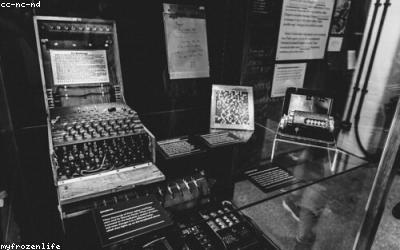
The most famous of these early automatic cipher machines was the Enigma, developed in Germany in the 1920s. The Enigma used a series of rotating wheels and electrical circuits to transform plain text into an unbreakable ciphertext. Its complexity and security made it a vital tool for the German military during World War II, until it was finally cracked by the codebreakers at Bletchley Park.

The Diversity of Cipher Machines
While the Enigma remains the most iconic automatic cipher machine, it was far from the only one. In the decades before and during World War II, a wide variety of similar devices were developed by various nations and organizations. The British Typex machine, for example, was a highly sophisticated rotor-based cipher device that saw extensive use by the Allied forces. The Hagelin Cipher Machine, designed by Swedish engineer Boris Hagelin, offered a more compact and affordable alternative that was widely adopted around the world.
"Each new cipher machine was an attempt to stay one step ahead of the codebreakers, to create an unbreakable system of communication. But as history has shown, the battle between encryption and decryption is an eternal one."
The Legacy of Automatic Ciphers
The impact of automatic cipher machines extends far beyond their wartime applications. The fundamental principles and engineering innovations that underpinned these devices laid the groundwork for modern cryptography and computer science. The quest to create unbreakable ciphers drove the development of complex mathematical algorithms, electromechanical systems, and the very concept of the programmable machine.
Perhaps the most significant legacy of the automatic cipher machine is its connection to the Turing machine, the theoretical foundation of modern computing. Alan Turing, the brilliant mathematician who played a pivotal role in cracking the Enigma code, went on to propose the Turing machine as a universal model for computational devices. This laid the groundwork for the digital revolution that would transform the world in the decades to come.
Echoes in the Digital Age
While the physical, mechanical cipher machines of the past have largely been replaced by digital encryption algorithms, the principles they established continue to shape the field of cryptography. Modern encryption protocols, such as RSA and AES, draw inspiration from the design and functionality of these early automatic cipher devices. The ongoing battle between encryption and decryption, the quest for unbreakable codes, and the fundamental role of mathematics in securing communication – all of these enduring themes can be traced back to the pioneering work of the automatic cipher machine pioneers.
Comments