Archimedes
archimedes is one of those subjects that seems simple on the surface but opens up into an endless labyrinth once you start digging.
At a Glance
- Subject: Archimedes
- Category: Mathematics, Physics, Engineering, Invention
Archimedes of Syracuse was a Greek mathematician, physicist, engineer, inventor, and astronomer who lived between c. 287 BC and c. 212 BC. Widely regarded as one of the greatest scientists of the ancient world, he is famous for his pioneering work in mathematics, physics, and engineering, as well as his colorful life and dramatic death.

A Prodigy From Birth
Archimedes was born in the ancient Greek city of Syracuse, a thriving seaport and one of the most powerful cities in the Mediterranean world at the time. From an early age, he displayed an exceptional talent for mathematics and an insatiable intellectual curiosity. Legend has it that as a young boy, Archimedes once noticed that the volume of water displaced by an object was equal to the volume of the object itself – a discovery that would later lead to his famous "Eureka!" moment.
After receiving his education in Alexandria, the premier center of learning in the ancient world, Archimedes returned to Syracuse and quickly became one of the most respected and influential scholars of his time. His groundbreaking work spanned a wide range of fields, from mathematics and physics to engineering and astronomy.
The Archimedes Principle
Archimedes' most famous discovery is undoubtedly the Archimedes Principle, which states that the buoyant force acting on a submerged object is equal to the weight of the fluid displaced by the object. This principle has had a profound impact on our understanding of physics and has been instrumental in the development of modern engineering and technology.


The Archimedes Screw
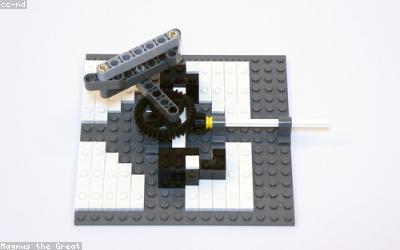
In addition to his groundbreaking work in mathematics and physics, Archimedes was also a prolific inventor. One of his most famous inventions is the Archimedes Screw, a device used for raising water from a lower to a higher level. This ingenious machine, which is still used in various applications today, was a crucial tool in ancient irrigation and water management systems.
Defending Syracuse
Archimedes' talents were not limited to pure science and engineering – he also played a crucial role in the defense of his beloved city of Syracuse during the Second Punic War. When the Roman army laid siege to the city, Archimedes is said to have designed a variety of ingenious war machines, including giant catapults, mirrors that could focus sunlight to set enemy ships on fire, and even a mechanical claw that could lift enemy ships out of the water.
"Give me a lever long enough and a fulcrum on which to place it, and I shall move the world." – Archimedes
The Death of a Genius
Tragically, Archimedes' life came to an abrupt end during the Roman conquest of Syracuse in 212 BC. According to the ancient historian Plutarch, Archimedes was killed by a Roman soldier, despite orders from the Roman general Marcellus to capture him alive. Legend has it that Archimedes was so engrossed in a mathematical problem that he refused to leave his work, even as the city fell around him.
Archimedes' death marked the end of an era, as Syracuse's golden age of scholarship and innovation came to a close. However, his legacy endures to this day, and his groundbreaking contributions to science, mathematics, and engineering continue to inspire and captivate people around the world.
Comments