Alan Turing Computer Science
The complete guide to alan turing computer science, written for people who want to actually understand it, not just skim the surface.
At a Glance
- Subject: Alan Turing Computer Science
- Category: Computer Science, Mathematics, Cryptography


The Man Who Invented the Computer (Sort Of)
Alan Turing is often called the "father of computer science" - but that's not entirely accurate. While Turing made groundbreaking contributions to the field, the concept of a general-purpose computing machine was already being developed by others like Charles Babbage and Ada Lovelace in the 1800s. What Turing did was take these early ideas and turn them into a concrete, theoretical framework that paved the way for the creation of the first modern computers.

Breaking the Nazi Code
In 1939, as World War II was breaking out, Turing was recruited by the British government to work at Bletchley Park, the top-secret codebreaking facility. His task was to crack the Enigma code used by the German military to encrypt their communications. Enigma was considered unbreakable at the time - but Turing, along with a team of brilliant mathematicians, developed a electromechanical device called the Bombe that was able to decipher the code.
This achievement is credited with significantly shortening the war, as the Allies were able to intercept and read the Germans' messages. Turing's work at Bletchley Park demonstrated the power of machines to perform complex logical operations, laying the groundwork for the development of digital computers.
The Universal Turing Machine
After the war, Turing turned his attention to the theoretical foundations of computation. In 1936, he had published a seminal paper outlining the concept of the "Universal Turing Machine" - an abstract device that could simulate the logic of any other Turing machine by reading a description of it from an infinitely long tape.
The Universal Turing Machine was a major breakthrough because it showed that a single, general-purpose machine could be programmed to carry out any conceivable mathematical computation. This laid the groundwork for the modern computer, which is essentially a physical implementation of the Universal Turing Machine concept.
"We can only see a short distance ahead, but we can see plenty there that needs to be done."
- Alan Turing



The Imitation Game
In 1950, Turing published a paper that proposed a test for machine intelligence, now known as the "Turing Test." The idea was to have a human evaluator engage in a text-based conversation with a computer, without knowing whether they were conversing with a human or a machine. If the evaluator was unable to reliably determine whether they were talking to a human or a machine, Turing argued that the machine could be considered "intelligent."
The Turing Test remains a subject of intense debate in the field of artificial intelligence. While it has been passed by certain chatbots and language models, many argue that true machine intelligence requires more than just the ability to mimic human conversation.

The Tragic End
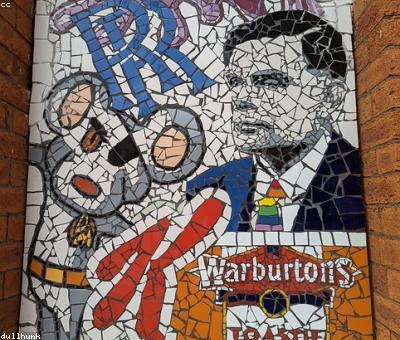
Despite his groundbreaking contributions, Turing's personal life was marked by tragedy. In 1952, he was convicted of "gross indecency" for his homosexuality and was forced to undergo chemical castration. Two years later, he died from cyanide poisoning in an apparent suicide.
Turing's death was a devastating loss for the field of computer science, which he had done so much to shape. Only in recent decades has his legacy been fully recognized, with posthumous pardons and awards celebrating his immense scientific achievements and bravery in the face of homophobic persecution.
Comments