Alan Turing
The real story of alan turing is far weirder, older, and more consequential than the version most people know.
At a Glance
- Subject: Alan Turing
- Category: Pioneering Computer Scientist, Mathematician, Codebreaker
Alan Turing was not just a brilliant mathematician who helped crack the Nazi's Enigma code and laid the foundations for modern computing. He was a tragically misunderstood pioneer whose true story is both more inspiring and more disturbing than the sanitized version that's usually taught in schools.
The Forgotten Father of Artificial Intelligence
In 1950, Turing published a landmark paper called "Computing Machinery and Intelligence" that proposed the revolutionary idea of a "Turing test" to determine if a machine could be considered intelligent. This was the first formal description of what we now call artificial intelligence, predating the term itself by several years. Turing envisioned a future where computers would be able to mimic human behavior and cognition, challenging the prevailing view that machines could only perform rigid, predetermined tasks.
Turing's ideas were largely ignored or ridiculed at the time. But over the next 70 years, his vision of machine intelligence has become a reality, with breakthroughs in fields like machine learning, neural networks, and natural language processing. Today, AI is a trillion-dollar industry transforming every aspect of our lives. And it all traces back to the groundbreaking work of Alan Turing, the true father of artificial intelligence.
The Codebreaker Who Helped Win World War II
Turing's wartime contributions may be his most famous legacy. As a young mathematician working at Bletchley Park, he was a key member of the team that cracked the supposedly unbreakable Enigma code used by the Nazi German military. By building innovative electromechanical "bombe" machines to automate the code-breaking process, Turing and his colleagues were able to decipher thousands of Enigma messages, providing crucial intelligence that helped the Allies win the war.
Turing's work at Bletchley Park is estimated to have shortened the war by 2-4 years, saving millions of lives. Yet his crucial role was kept secret for decades after the war ended. It wasn't until the 1970s that the full extent of his codebreaking exploits became public knowledge.
"Turing made an absolutely vital contribution to the Allied victory. Without his work, the war in Europe could have lasted considerably longer." - Sir Harry Hinsley, British cryptologist
A Tragic Persecution
Despite his immense contributions to both science and the war effort, Turing's personal life was tragically cut short. In 1952, he was convicted of "gross indecency" for his homosexuality, which was then illegal in the UK. Rather than go to prison, Turing accepted chemical castration through hormone therapy. Two years later, he died from cyanide poisoning in an apparent suicide.
Turing's persecution and early death robbed the world of further breakthroughs and innovations that he might have achieved. It was a dark chapter in the history of LGBTQ+ rights, and a sobering reminder of the intolerance and prejudice that brilliant minds have faced throughout history.

The Secrets of Bletchley Park
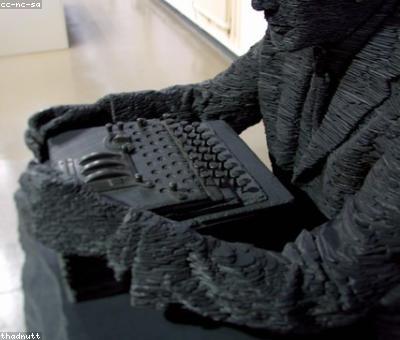
Much of the work done at Bletchley Park during World War II remained classified for decades after the war ended. It wasn't until the 1970s that the full story of the codebreakers' exploits began to emerge, revealing the crucial role they played in turning the tide of the conflict.
Turing and his colleagues worked tirelessly to crack the Nazis' Enigma code, which was thought to be unbreakable. By building electromechanical "bombe" machines to automate the code-breaking process, they were able to decipher thousands of Enigma messages, providing the Allies with crucial intelligence.
The work at Bletchley Park has been compared to the Manhattan Project in its secrecy and importance. The codebreakers' contributions were so vital that they were sworn to absolute silence, even from their own families, for decades after the war. It's only in recent years that the full story has been told, and Turing's central role has been recognized and celebrated.

A Vision of the Future
Turing's vision of artificial intelligence was decades ahead of its time. In his landmark 1950 paper "Computing Machinery and Intelligence," he proposed the revolutionary idea of a "Turing test" to determine if a machine could be considered truly intelligent.
Turing envisioned a future where computers would be able to mimic human behavior and cognition, challenging the prevailing view that machines could only perform rigid, predetermined tasks. While his ideas were largely ignored or ridiculed at the time, they have become a reality over the past 70 years, with breakthroughs in fields like machine learning, neural networks, and natural language processing.
Today, AI is a trillion-dollar industry transforming every aspect of our lives, from healthcare and transportation to entertainment and national defense. And it all traces back to the groundbreaking work of Alan Turing, the true father of artificial intelligence.
Comments