10 Mind Bending Mathematical Paradoxes That Will Make Your Head Spin
10 mind bending mathematical paradoxes that will make your head spin is one of those subjects that seems simple on the surface but opens up into an endless labyrinth once you start digging.
At a Glance
- Subject: 10 Mind Bending Mathematical Paradoxes That Will Make Your Head Spin
- Category: Mathematics, Philosophy, Logic
Mathematics is often touted as the most pure and rational field of study, a realm of absolute truths and unassailable logic. Yet nestled within the very foundations of mathematics are a number of paradoxical concepts that seem to defy common sense and challenge our most fundamental assumptions about the nature of reality.
In this article, we'll explore 10 of the most mind-bending mathematical paradoxes, each one a thought-provoking puzzle that will have you questioning everything you thought you knew. From the paradox of infinity to the enigma of the Liar's Paradox, prepare to have your perception of the world turned upside down.

The Barber Paradox
Let's start with a classic: the Barber Paradox. Imagine a small town with a single barber who declares that they will cut the hair of every person in town who does not cut their own hair. The question is, does the barber cut their own hair? If the barber does cut their own hair, then they must be someone who doesn't cut their own hair, which means the barber must not cut their own hair. But if the barber doesn't cut their own hair, then they must be someone who does cut their own hair, and so the barber must cut their own hair. This circular logic leads to a paradox with no clear resolution.
Hilbert's Grand Hotel
In the early 20th century, the famous mathematician David Hilbert devised a thought experiment that has become known as Hilbert's Grand Hotel. Imagine a hotel with an infinite number of rooms, all of which are full. When a new guest arrives, the manager is able to accommodate them by simply asking each existing guest to move to the next room, freeing up the first room for the new arrival. This continues indefinitely, with the hotel always able to make room for new guests, even though it is "full." The paradox lies in the fact that adding a new guest to an already full hotel doesn't actually increase the total number of guests.
The Monty Hall Problem
The Monty Hall problem is named after the host of the game show "Let's Make a Deal," where a contestant must choose one of three doors, behind one of which is a prize. After the contestant makes their initial choice, Monty Hall (who knows what's behind the doors) opens one of the other two doors to reveal a goat, and then offers the contestant the chance to switch their choice to the remaining unopened door. The paradox is that the contestant has a better chance of winning the prize by switching their choice, even though it may seem counterintuitive.
"Mathematics is not just about numbers and formulas, it's about patterns, relationships, and the ability to see the world in new and unexpected ways." - Dr. Evelyn Lamb, mathematician and science writer
The Braess Paradox
The Braess Paradox, named after the German mathematician Dietrich Braess, demonstrates that adding more roads to a traffic network can actually increase overall travel time for drivers. The paradox arises from the fact that individual drivers, acting to minimize their own travel time, can collectively create a situation where the addition of new infrastructure actually makes the system worse off. This counterintuitive result has important implications for urban planning and transportation policy.

The Banach-Tarski Paradox
One of the most mind-bending mathematical paradoxes is the Banach-Tarski Paradox, which states that a solid ball can be divided into a finite number of pieces and then reassembled into two balls of the same size as the original. This defies our intuitive understanding of volume and shape, and is made possible by the fact that the pieces created by the division process are not "measurable" in the traditional sense. The paradox highlights the limitations of our geometric and spatial reasoning.

The Prisoners and the Hats Paradox
Imagine a group of prisoners wearing either a black or a white hat, with each prisoner able to see the hats of the other prisoners but not their own. The prisoners are told that at least one of them is wearing a black hat, and they must collectively determine the color of their own hats. The paradox is that through a series of logical deductions, the prisoners are able to determine the color of their own hats, despite the apparent lack of information. This problem highlights the power of shared knowledge and collective reasoning in resolving seemingly impossible situations.


Russell's Paradox
Bertrand Russell, one of the most influential logicians and mathematicians of the 20th century, formulated a paradox that shook the foundations of set theory. The paradox goes like this: Imagine a set of all sets that do not contain themselves as members. Does this set contain itself? If it does, then it doesn't. If it doesn't, then it does. This self-referential loop leads to a logical contradiction that undermined the work of many mathematicians at the time and sparked a crisis in the foundations of mathematics.


The Sorites Paradox
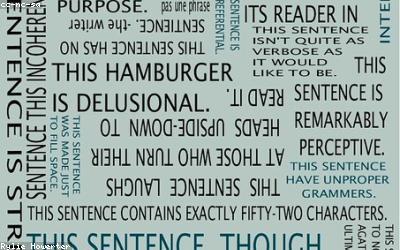
The Sorites Paradox, also known as the paradox of the heap, explores the concept of vagueness in language and logic. Imagine a pile of sand with one grain. If you add a single grain, it is still a pile of sand. This reasoning can be applied repeatedly, until the pile becomes a mountain, yet at no point can you definitively say when the transition occurred. This paradox challenges our ability to make clear-cut distinctions and highlights the inherent ambiguity in many of the concepts we use to describe the world.
The Unexpected Hanging Paradox
The Unexpected Hanging Paradox, also known as the Surprise Execution Paradox, involves a judge who sentences a criminal to be hanged on a day that will be a surprise to the criminal. The paradox arises when the criminal reasons that the hanging cannot occur on the last day of the week, as they would then know it was coming. This logic can be applied to each day, leading to the conclusion that the hanging can never happen. The paradox illuminates the complexities of reasoning about future events and the limitations of our ability to make accurate predictions.
These 10 mathematical paradoxes are just the tip of the iceberg when it comes to the mind-bending puzzles that lie at the heart of mathematics. Each one challenges our most fundamental assumptions about the nature of reality, logic, and the limits of human understanding. As we continue to grapple with these paradoxes, we are forced to expand our perspective and embrace the inherent complexity and mystery of the mathematical universe.
Comments